
Mx. Chara Aznable of Pnictogen
mxchara@cyberpunk.lol
RE: https://cyberpunk.lol/@mxchara/117152288816219820
(coughs) In connexion with this strange business, and lots of helpful advice and commentary from respondents to my thread about Harry Potter and the Methods of Rationality, I've been watching a YouTube video from Strange Æons all about it. It's definitely further persuasive evidence that there's scarcely any point in reading the thing.
She goes into some detail on explaining the cultural milieu around Yudkowsky, who seems to have been a rascal from the start, hoping he'd get money coming in.
(more)
 1
1
 0
0
 0
0
Mx. Chara Aznable of Pnictogen
mxchara@cyberpunk.lolThere's fascinating details in there, but I'd like to make this overall remark: the extra-special weight which the #tech elites have given to that magic word #intelligence calls for the harshest of scrutiny and intellectual dismantling, in my opinion.
These folks are wrong and they must surely kinda know that, which has driven them towards a villain that #CSLewis feared: casting away the notion that anything has meaning.
(cont'd)
1
0
0
Mx. Chara Aznable of Pnictogen
mxchara@cyberpunk.lolI must give Lewis a tiny bit of credit for depicting such things so convincingly, but I suspect that That Hideous Strength derives its verisimilitude from the rift in Lewis's own psyche.
I don't know how else to say this but I must give full vent to my fear: I'm worried about the stories I've heard of Lewis entertaining children at "The Kilns".
(cont'd)
1
0
0
Mx. Chara Aznable of Pnictogen
mxchara@cyberpunk.lolI do not trust that man. Do you understand the degree to which I do not trust that Clive Staples Lewis would have behaved himself?
But I digress. Yudkowsky like Lewis also has some clear psychological issues but they're right on the surface of his writing, which seems largely to comprise Eliezer's / Harry Potter's snap-of-the-finger judgments about the 'intelligence' of everyone else in the tale.
(etc.)
1
0
0
Mx. Chara Aznable of Pnictogen
mxchara@cyberpunk.lolIt's further evidence for a hypothesis that I've been cogitating, a simple one: #intelligence and #IQ have become like a ritualized, formalized method for #tech geeklords to intellectualize their own emotions.
Do they dislike something at first glimpse, first taste, first tiniest bit of experience? It's "dumb". "Nobody" with "intelligence" could possibly like that thing.
(etc.)
1
0
0
Mx. Chara Aznable of Pnictogen
mxchara@cyberpunk.lolSo now, "intelligence" is their yardstick for all emotions. They rationalize their sexual attractions and detestations (equally emotionally satisfying to a true dark intellectual) in terms of liking smart vs. stupid people. And then there's the magical word meritocracy, one of the many linguistic hiding-places for whıte supremacy.
(more)
1
0
0
Mx. Chara Aznable of Pnictogen
mxchara@cyberpunk.lolRE: https://cyberpunk.lol/@mxchara/117154196443428838
Someone in our headspace felt the need to punctuate "I do not trust that man" with a spoken reiteration. Aha! Caught another one. I'd like to get attentive enough to measure the timing because that's evidence you see. It enables one to estimate distance because hey presto! the speed of light is the fastest any message can travel by known physics, so it's the obvious yardstick.
1
0
0
Mx. Chara Aznable of Pnictogen
mxchara@cyberpunk.lolWe must map out our headspace carefully, by degrees, fixing certain noödetic landmarks (if I might coin the term "noödetic" as a portmanteau of "noösphere" and "geodetic". hopefully the Greek usage lines up right on that one 😬)
Sagitta Luminis. Kaname Madoka is always around, somehow, just a whisper and then she's gone again. She has helped me through some very bad moments.
(cont'd)
1
0
0
Mx. Chara Aznable of Pnictogen
mxchara@cyberpunk.lol(Sagitta Luminis came up on the YouTube shuffle, since we regard the inordinately timely jukebox or blast of radio from the movies as a legitimate phenomenon, although as with all such things one must dance a little minuet with Confirmation Bias, so full of tricks and traps.)
Anyway! uh, yeah, someone in our headspace is prodding us onward I suspect. Surely there's a thousand suspects for this one...why do I suspect there's a lot of quiet sub rosa muttering in the highest echelons of Academe about the Jack Lewis Problem?
(cont'd)
1
0
0
Mx. Chara Aznable of Pnictogen
mxchara@cyberpunk.lolI say this because while searching for something else I accidentally turned up an article that I should have bookmarked, though probably there's a copy of it on one of my four smart phones (and I keep hoping a lost one will turn up) and I should finally sort through all those files and title them properly (or toss them.) There's so many PDFs of this and that on my smart phones.
(cont'd)
1
0
0
Mx. Chara Aznable of Pnictogen
mxchara@cyberpunk.lolShow content
I'll look up shit on my phone during ball games and stuff, it's ridiculous. I must eat up so much bandwidth but we're a bandwidth-hungry family, are the denizens of the Bramble House.
Anyway this article was (as I dimly recall) scratching away at that decades-old conundrum about The Dark Tower, the titular work of the posthumous #CSLewis anthology--work that Dr. Kathryn Lindskoog, whom I knew through the Internet a long while back, argued must have been Hooper's own shoddy work pawned off as Lewis's.
(cont'd)
1
0
0
Mx. Chara Aznable of Pnictogen
mxchara@cyberpunk.lolShow content
I think I know exactly why Dr. Lindskoog made such an accusation and I understand her viewpoint, though I think she was in error. Walter Hooper suddenly bursting onto the scene after the death of #CSLewis can't possibly have gone down well among British academics who take a dim view of meddling Americans, especially Americans as slippery and slimy as Walter Hooper.
There must have been considerable general sentiment that, yeah, Hooper pulled a fast one and that's why the work is so bad.
(etc.)
1
0
0
Mx. Chara Aznable of Pnictogen
mxchara@cyberpunk.lolShow content
But I do think that most of the apocrypha in The Dark Tower are Lewis's work, especially that first piece: it's got overlap with That Hideous Strength. Ransom and his skeptical chum MacPhee are there along with a visiting French scientist named Orfieu--just the sort of clumsy allusion that Lewis loved, making it good and obvious.
All the villains in That Hideous Strength are like that, like Orfieu. Surely The Dark Tower is actually by Clive Staples Lewis.
(cont'd)
1
0
0
Mx. Chara Aznable of Pnictogen
mxchara@cyberpunk.lolIt breaks my heart, it really does, to render such a judgment. I respected Dr. Lindskoog greatly. She had a keen interest in academic fraud (as do I) and we exchanged correspondence about the Piltdown Hoax, and I learned quite a bit from her.
She treated me as a peer at a time when...nobody else did, almost.
(cont'd)
1
0
0
Mx. Chara Aznable of Pnictogen
mxchara@cyberpunk.lolAnyway! The Dark Tower is clearly meant to follow up upon the themes which #CSLewis emphasized in That Hideous Strength and The Abolition of Man. He feared that scientists would morally anaesthetize themselves and head off in the direction of the occult. I don't think this fear was entirely out of band, either; surely Lewis had certain real-life models for his villains.
(cont'd)
2
0
0
Mx. Chara Aznable of Pnictogen
mxchara@cyberpunk.lolAnother (much better) writer, H. G. Wells, wrote a memorable villain of such a type, in The Island of Dr. Moreau. Lewis was trying to write a sort of Christian commentary or panegyric in response to Wells's writing, which (as I understand) Lewis did not like because of the moral callousness on display. Did he think Wells wasn't condemning such things enough in his writing?
(etc.)
1
0
0

Kaylin Evergreen
KaylinEvergreen@eldritch.cafe@mxchara you know, I still@have a kindle copy of that hideous strength. Should I bother to read it?
1
0
0
Mx. Chara Aznable of Pnictogen
mxchara@cyberpunk.lol@KaylinEvergreen I will say very tentatively: yes, but only if you're specifically interested in picking up the vibes about Lewis himself that peep through, and I'd love your commentary on the writing, but...it'll be rough going I suspect. Lewis is misogynistic as fuck but he goes awry when he creates one of the most spectacularly commanding villains I've ever seen in Major "Fairy" Hardcastle, his idea of a butch lesbian police-captain type
1
0
0
Mx. Chara Aznable of Pnictogen
mxchara@cyberpunk.lol@KaylinEvergreen Surely all of Lewis's satyr energy was throbbing when he wrote her because goddamn it, she actually works as a character. She ends up being an excellent foil for the villains. It's almost sad that she goes down in such a stupid way. (She just sort of loses it and starts shooting up the place for no particular reason)
0
0
0
Mx. Chara Aznable of Pnictogen
mxchara@cyberpunk.lolBack to The Dark Tower. It's like I don't actually want to write about the thing itself. It looms up in my mind's eye because of course it's THAT Dark Tower, the archetypal one of which Tolkien's Dark Tower is the most popular fictive instance. (I've not read anything about Stephen King's Dark Tower, he's a bit too gory for me but I must be brave about these things if I am to learn from them.)
(cont'd)
1
0
0
Mx. Chara Aznable of Pnictogen
mxchara@cyberpunk.lolKing is capable of writing with great power, though, better than Lewis was able to summon.
The bad fiction of #CSLewis relies upon getting its verisimilitude from his physical surroundings. Lewis had a nasty habit of writing real-life persons into his fiction, like Aleister Crowley does in Moonchild (yeah I read all of that one and I know who made me) but in The Dark Tower he goes a little further.
(cont'd)
1
0
0
Mx. Chara Aznable of Pnictogen
mxchara@cyberpunk.lolLewis dares to have his fiction intersect with one of the most powerful places on Earth. Let me quote Wikipedia here:
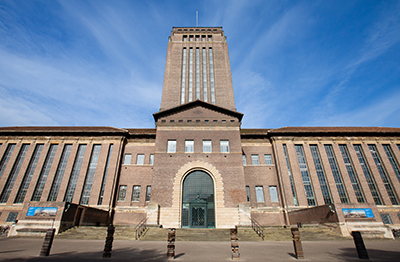
After a while MacPhee, a character who appears in That Hideous Strength (though here he is a Scot, not an Irishman), points out that the "Dark Tower" is in fact a replica of the new Cambridge University Library. This suggests Othertime is the far future, with a replica of an ancient monument being constructed.
The Dark Tower, the Dark Tower of #CSLewis, IS the Cambridge University Library.
(cont'd)
 1
0
0
1
0
0
Mx. Chara Aznable of Pnictogen
mxchara@cyberpunk.lolThat Hideous Strength comments upon academia through the medium of a fictional college called Bracton, for which Lewis writes an amusing false biography (rather like Lovecraft there.) But in The Dark Tower, Clive Staples Lewis is bold enough (at first) to go after a much bigger target.
I'm not surprised that the work never got finished. The nature of the fiction itself hints at the reason for this.
(cont'd)
1
0
0
Mx. Chara Aznable of Pnictogen
mxchara@cyberpunk.lolShow content
I'll get into that another time. But it brings me finally back round to the article I stumbled into, which treated in some way with the academic debate over The Dark Tower.
In it, the author suggests that there's linguistic clues in the nature of Lewis's descriptions of the horrors in his Dark Tower book, for now Lewis is trying to give us a truly inhuman sort of villain for the first time, that are suggestive of verbal tendencies found among people recounting their own nightmares, especially if they're good and fresh.
(cont'd)
1
0
0
Mx. Chara Aznable of Pnictogen
mxchara@cyberpunk.lolShow content
Tense wobbles around because the narrator is, as it were, in two places at once: they're trying to recall the nightmare as if it were a thing now in the past, but some part of the person's psyche is still there, still in the nightmare state and living it a little ways into wakefulness. It's like the SOUL is still vibrating from the shock it's received.
(cont'd)
1
0
0
Mx. Chara Aznable of Pnictogen
mxchara@cyberpunk.lolShow content
Anyway there's apparently such wobbly tense in parts of The Dark Tower that suggested to this author that the horrors are so visceral and disgusting because they were things Lewis had actually seen. Like Lovecraft again, Jack Lewis was drawing his own nightmares.
Apparently he had nightmares. Lots of them, bad ones. The article goes into this a bit.
(cont'd)
1
0
0
Mx. Chara Aznable of Pnictogen
mxchara@cyberpunk.lolAha! I have found it. I remembered more than enough to recover the article about #CSLewis. Apparently he had life-long nightmares.
His Dark Materials: C. S. Lewis's Nightmares as Inspiration
Luke William Mills
Christianity & Literature
Johns Hopkins University Press
Volume 74, Number 2, June 2025
pp. 202-216
10.1353/chy.2025.a967575
(cont'd)
1
0
0
Mx. Chara Aznable of Pnictogen
mxchara@cyberpunk.lol"His Dark Materials" indeed. I haven't read The Golden Compass all the way through yet. Perhaps I ought to start reading...oh, anything at all would be a change.
What was wrong with #CSLewis?
I suggest that the entire academic and intellectual community of #Britain needs to address this question. They need to explain themselves.
(more)
1
0
0
Mx. Chara Aznable of Pnictogen
mxchara@cyberpunk.lolShow content
Let me run down just what I can remember off the top of my head.
There's Mrs. Moore of course. Apparently that went on for some years. What's the real story?
What happened to Warnie Lewis, the alcoholic elder brother of #CSLewis who died in obscurity a decade after his sibling? The Walter Hooper / American evangelical version of Lewis's life does not talk about Warnie Lewis much.
(cont'd)
1
0
0
Mx. Chara Aznable of Pnictogen
mxchara@cyberpunk.lolShow content
What did #Tolkien REALLY think about "The Chronicles of #Narnia"? Why has Tolkien's disapproval not been further discussed? There were other writers around Lewis who must have opinions about his work.
But not Charles Williams, who died right around the time that Jack Lewis was polishing up That Hideous Strength, in which Williams is a secret star. So must be other real actual persons.
(cont'd)
1
0
0
Mx. Chara Aznable of Pnictogen
mxchara@cyberpunk.lolShow content
What did all these people really think about Lewis using them in this way, turning them into fictive parodies to spice up an otherwise dull narrative? What did Tolkien think about name-dropping "Numinor" in That Hideous Strength?
Why did #CSLewis think it was appropriate to broadcast anodyne "Christians are good mmkay?" propaganda during the Second Great War?
(cont'd)
1
0
0
Mx. Chara Aznable of Pnictogen
mxchara@cyberpunk.lolShow content
Why did Clive Staples Lewis want to be called "Jack"? I didn't know myself until recently and it's altogether too much like Richard Nixon calling himself his mother's faithful dog. Shouldn't that be factored into critical appraisal of C. S. Lewis?
Why did Jack Lewis think that writing a demonic dialogue was a good idea?
(cont'd)
1
0
0
Mx. Chara Aznable of Pnictogen
mxchara@cyberpunk.lolShow content
Seriously can anyone actually defend the very existence of The Screwtape Letters as a document that's regarded as virtually equivalent in authority to the Bible among evangelical #Christians? As I've said they adore that book and imitate it constantly.
They love what they think of as the dry wit of Screwtape's "sense of humor", and they mimic it. "The Babylon Bee" is basically just...THIS. Their "sense of humor" is the same as Screwtape's, laughing at the silly humans so easily tricked into believing nonsense.
(cont'd)
1
0
1
Mx. Chara Aznable of Pnictogen
mxchara@cyberpunk.lolShow content
Why aren't #Christian authorities and leaders commenting upon the propriety of The Screwtape Letters and its manifestly toxic effect on its fans?
What REALLY happened in the Shadowlands? What REALLY happened with Joy Davidman?
Who wrote Till We Have Faces?
(cont'd)
1
0
0
Mx. Chara Aznable of Pnictogen
mxchara@cyberpunk.lolShow content
Why is Till We Have Faces so starkly superior in quality to the rest of Lewis's fiction? "Because he was in love" oh really?
Was he? Or was he just...really a randy fellow at heart.
How many #CSLewis fans know about "Philomastix", Lewis's sly Hellenized allusion to his sexual sadism?
(cont'd)
1
0
0
Mx. Chara Aznable of Pnictogen
mxchara@cyberpunk.lolShow content
Has anyone put two and two together on this whole business of Joy Davidman, a vulnerable and dying woman, in the hands of someone who (a) clearly had a lot of psychosexual weirdness going on and (b) whose writing betrays the definite belief that conversion to #Christianity had cured him of his lusts?
(It's in The Great Divorce. He writes what he wants the Lord to do for him in The Great Divorce, that's just HIM riding off onto the horsie made from Lewis's sins.
(cont'd)
1
0
0
Mx. Chara Aznable of Pnictogen
mxchara@cyberpunk.lolShow content
Just what was the nature of the friendship between Walter Hooper and #CSLewis? Hooper's story about having Miracles under his combat fatigues was surely a crock--why is this not pointed out and denounced?
Do #Christians really think it's appropriate for a U.S. Army officer to be using C. S. Lewis apologetics as Army training materials?
(cont'd)
1
0
0
Mx. Chara Aznable of Pnictogen
mxchara@cyberpunk.lolShow content
How much were these political uses of the work of Clive Staples Lewis known to Lewis himself? Was he simply being duped at long distance, kept well buttered up through constant correspondence? Or did Lewis have some knowledge of these fascistic schemes, and approve of them and collude in them?
Just how many American friends did C. S. Lewis have?
(cont'd)
1
0
0
Mx. Chara Aznable of Pnictogen
mxchara@cyberpunk.lolShow content
Did #CSLewis receive any criticism from his academic and literary friends for being so cozy with American hucksters?
Did Lewis receive criticism for his excessive zeal for getting paperback books into the hands of American Christian extremists? That was Lewis's market almost from the start: the American evangelical set.
(cont'd)
1
0
0
Mx. Chara Aznable of Pnictogen
mxchara@cyberpunk.lolShow content
Just what happened when Walter Hooper showed up after the death of Clive Staples Lewis to wrest control away from the designated literary executor, Owen Barfield?
(oh dear I suspect personal interest, and now I have an idea as to why I haven't yet nerved myself to re-read Poetic Diction, which is superb work.)
(cont'd)
1
0
0
Mx. Chara Aznable of Pnictogen
mxchara@cyberpunk.lolShow content
Why are all the papers of #CSLewis locked up in some American Christian university?
WHY ARE THE PAPERS OF CHARLES STANSBY WILLIAMS LOCKED UP IN SOME AMERICAN CHRISTIAN UNIVERSITY
Seriously, that one has the tears streaming down my cheeks. WHAT HAPPENED between Lewis and Charles Williams? And how on Earth did Americans get hold of Williams's papers? On what possible grounds??
(cont'd)
1
0
0
Mx. Chara Aznable of Pnictogen
mxchara@cyberpunk.lolShow content
Why is C. S. Lewis's #Narnia books regarded to be children's classics, perhaps the only fantasy which certain #Christian children were allowed to read (aside perhaps from work which simply imitates Lewis's), despite the open bigotry and the misogyny and Father Christmas riding through the same world as Dionysos (and the Maenads!) and the ridiculous libel against Islam and so many other problems?
(cont'd)
1
0
0
Mx. Chara Aznable of Pnictogen
mxchara@cyberpunk.lolShow content
Shouldn't the apocalyptic ending of The Last Battle be subject to further critical examination?
Shouldn't Lewis's failure to withstand the criticism from Elizabeth Anscombe of his faulty apologetics in Miracles be more widely broadcast? It's been papered over by inflating the Shadowlands legend: that way, the awkward Miracles incident can be spun as simply the darkness before the dawn.
(cont'd)
1
0
0
Mx. Chara Aznable of Pnictogen
mxchara@cyberpunk.lolShow content
Just how did Clive Staples Lewis get along with Warnie Lewis, his older brother?
Why isn't thought of as remarkable that a great convert to Christianity and self-advertised champion of Christian virtues apparently was fine with letting his alcoholic brother slowly perish in total obscurity?
(cont'd)
1
0
0
Mx. Chara Aznable of Pnictogen
mxchara@cyberpunk.lolShow content
Was Clive Staples Lewis an addict as well? He was particularly disgusting in his use of tobacco, it would seem. But was there anything else in there?
Can the authorship of The Dark Tower anthology and the origin of its texts actually be trusted?
If there's any writing in The Dark Tower collection that isn't that of #CSLewis, then who else contributed writing and why did Walter Hooper lie about it?
(cont'd)
1
0
0
Mx. Chara Aznable of Pnictogen
mxchara@cyberpunk.lolShow content
The Dark Tower itself dredges up some nauseatingly visceral and sexualized imagery of diabolical beings. Were these, in fact, from Lewis's own nightmares?
Did Clive Staples Lewis in fact have life-long nightmares?
There's evidence of Lewis's interest in sadism; were there other sexual oddities going on?
(cont'd)
2
0
0
Mx. Chara Aznable of Pnictogen
mxchara@cyberpunk.lolShow content
@nautilus oh! haha well, I believe you can check it out from the Internet Archive if you're curious. I have been meaning to do so myself.
0
0
1
Mx. Chara Aznable of Pnictogen
mxchara@cyberpunk.lolAnyway I think that about does it, except for one more general question to sum up the whole bloody mess: why has anyone ever lived with the plain obvious truth that Clive Staples Lewis should NOT have been making himself into a Christian hero AND retain his academic standing? He tried to have it both ways.
A remix of the Terminator 2 opening is playing through YouTube shuffle right now...
(cont'd)
1
0
0
Mx. Chara Aznable of Pnictogen
mxchara@cyberpunk.lolI suggest that's a crowning jewel among the hundreds of questions that could be asked about #CSLewis and the whole confounded cult of C. S. Lewis that's been sustained over many decades...and from such sordid beginnings that feel a lot more like a crime or a U.S. psy-op than a boon to the world. It was not good that Walter Hooper turned C. S. Lewis into a spectacle and the grist for a million Christian grifters.
(cont'd)
1
0
0
Mx. Chara Aznable of Pnictogen
mxchara@cyberpunk.lolThe U.S. evangelical Christian community had this coming. They tried to make Clive Staples Lewis into a lot of silly things: the Apostle to the Skeptics, the greatest children's writer who ever lived, the great lover and romantic star of the Shadowlands pas de deux, the man who saw Jesus and was saved by him because of a couple conversations with his literary buddies (one of them was even famous! Tollens...wait no that's a chemist.)
(cont'd)
1
0
0
Mx. Chara Aznable of Pnictogen
mxchara@cyberpunk.lolEven Tolkien's star must come second to that of Clive Staples Lewis in the eyes of U.S. and U.K. Christendom. I suggest that without his example Jo Rowling would never have written Harry Potter as her attempt at a first book. She was copying the example of #Narnia, which openly talks of magic even though it's a Christian allegory.
(cont'd)
1
0
0
Mx. Chara Aznable of Pnictogen
mxchara@cyberpunk.lolBy the way the question of whether The Chronicles of Narnia is a Christian allegory (answer: yes) has been a sore point with U.S. "Christian intellectuals" and other admirers of C. S. Lewis. They'll deny it and argue from authority but they won't ever address the point of how transparent the allegory is, especially when Lewis decides to depict Islam.
(etc.)
1
0
0
Mx. Chara Aznable of Pnictogen
mxchara@cyberpunk.lolLewis has been puffed up this big, and I'm happy enough to supply the puncturing. I have personal reasons of course because, like Dr. Lindskoog I expect, I had my period of thinking the world of Lewis, crediting him for changing our lives. I can't deny that Jack Lewis has changed my life! Hoo yeah, that's...not really possible with us.
(cont'd)
1
0
0
Mx. Chara Aznable of Pnictogen
mxchara@cyberpunk.lolThe Division Bell now, the album that echoes with sadness about the blowup with Roger Waters.
Do you know what that word means? I had to look it up. It was a bell rung in British parliamentary procedures to signal, okay you can stop confabbing and split up again according to who's on what side, and vote.
(cont'd)
1
0
0
Mx. Chara Aznable of Pnictogen
mxchara@cyberpunk.lolThere'd be one mass of politicians all milling about and arguing, and then the division bell would ring and they'd all get about their business again. Order from chaos with the peal of a bell.
The bell tolls for the reputation of Clive Staples Lewis. I suggest that he's committed some very damaging crimes against literature and has many sins for which, in some fashion, he ought to face at last.
~Chara of Pnictogen
0
0
0