
nautilus
nautilus
start of my QOTD (quote of the day) thread. I’m gonna try reading something every day and quoting something interesting or thought-provoking here. inclusion does not imply total endorsement
 1
 0
 0
nautilus
nautilusQOTD 9/29/2026
Pacific Islanders in Guam and American Samoa used to enjoy nutritious local staples like root crops, fresh vegetables and lean meats. Then, in the late 1800s US colonizers arrived with unhealthy food products in tow. The introduction of the “Western diet” - high in sugar, loaded with fats, and made up of ultra-processed carbohydrates - altered the region’s cuisine.
This nutrition transition on the Pacific Islands accelerated after World War II. In the wake of the war’s destruction, native Pacific Islanders faced severe food shortages. Living off locally grown produce was no longer enough. Instead, Pacific Islanders were forced toward Western products that were shelf stable, including canned meats like Spam. Eating processed foods became necessary for survival, but firmly established unhealthy eating patterns. Imported products now overwhelmingly occupy the supermarket shelves with cheaper price tags, which leaves traditional foods by the wayside.
To assume Pacific Islanders can simply transition back to eating local, healthy ingredients ignores the lasting impact of colonized diets. Since World War II, Pacific Islanders have incorporated Spam and other processed foods into their local cuisine. Expecting Pacific Islanders to change their diet because it’s unhealthy neglects the reality that these foods have become part of their culture.
Sara Mar, “A Colonizer’s Diet” (May 11, 2021)
this article also explains how US policy excludes Pacific Islanders in Guam and American Samoa from SNAP and allocates them less money to buy nutritious food
1
0
0
nautilus
nautilusQOTD 9/30/2026
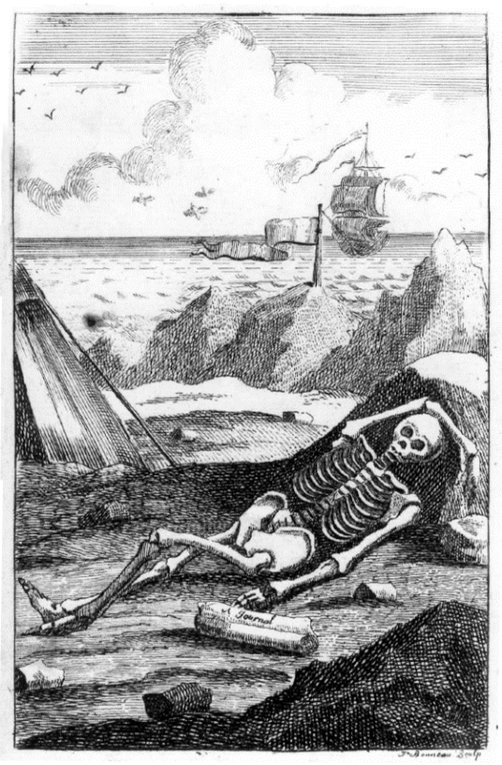
Sodomy Punish’d and its subsequent variations fed the burgeoning literary genre of castaway narratives or “Robinsonades”. (Indeed, some historians speculate that the many similarities between Sodomy Punish’d and Robinson Crusoe were knowingly inserted by publishers to increase sales.) As Joseph Bristow writes in *Empire Boys&, hit literary form fashioned its young male reader into a “responsible citizen … with the future of the world lying on his shoulders.” Here the message is prohibitory: adhere to the sexual norms of empire - at least, do not get caught deviating - or you may end up on an island, alone.
Hunter Dukes, “‘On This Desolate Island’: Sodomy Punish’d“ (May 28, 2024)
2
0
0

𝕹𝖞𝖝 妛彁䷜ 
nyx@social.xenofem.me
 0
0
1
nautilus
nautilusQOTD 10/6/2026
The American Beverage Association sued to overturn a soda tax in Santa Cruz, which it has so far failed to do. Santa Cruz Local uncovers details of the group’s earlier success squashing a soda tax effort in Watsonville, a neighbouring city. The Santa Cruz lawsuit has far-reaching consequences: the recent victory for the city could unlock the ability for charter cities across California to tax sugary beverages. We found that the soda industry recruited and leveraged the credibility of prominent Black and Latino leaders to amplify opposition against public health taxes within their own communities. We have also identified five other lawsuits. The ABA was involved in four of them.
Thin Lei Win et al., “Big Food vs. the People” (July 22, 2026)
1
0
0
nautilus
nautilusQOTD 10/7/2026
Back in the 1980s, tobacco giants began aggressively expanding into manufactured foods, buying up some of the biggest food firms. For example, Philip Morris used to own Kraft General Foods and R.J. Reynolds owned Nabisco. This was the era when ultra-processed food production really ramped up in the U.S., [Laura] Schmidt says.
She says tobacco firms had spent decades amassing research on how to make cigarettes more pleasurable and addictive with chemical additives. And she says internal company records show they deliberately applied this knowledge to food manufacturing.
“The very technologies that were used to figure out how to optimize the addictive properties of nicotine using added sugar and artificial flavorings - that core technology was transferred from the tobacco industry to ultra-processed food development,” Schmidt says.
1
0
1
nautilus
nautilusQOTD 10/9/2026
Last fall I taught a segment on a recent TikTok scandal where a white nutritionist went on a rant about how salsa is not a serving of vegetables. She equated salsa with ketchup and berated people for counting salsa as part of their daily servings of fruits and vegetables.
I also showed several nutritionists, many identifying as Latina, who pushed back because the salsas eaten in many Latino homes were made from fresh tomatoes, chiles, onions, herbs, and spices. If salsa was not a serving of vegetables, they asked, then what was it?
My students picked up on the racialized differences in the ways that nutritionists understood what salsa was. One student pointed out that the white nutritionist may have considered salsa from a jar, which might have preservatives and other stuff in it. However, she may not realize that some families make salsa and other sauces from scratch.
This example identifies how what is considered nutrition science can provide contradictory advice based on a lack of general understanding of cultural practices of food preparation and consumption; this shifting or competing advice can create public mistrust.
Hanna Garth, “What the New Food Pyramid Tells Us About Science and Culture” (October 2026)
1
0
1
nautilus
nautilusQOTD 10/10/2026
In 1854, cholera was killing hundreds of people in the Soho neighborhood of London. More than 500 people died in ten days. A physician named John Snow mapped the cases and traced them to a single contaminated water pump on Broad Street - the founding act of modern epidemiology.
What is less often remembered is that the pump served a working-class neighborhood. The wealthy had private wells. The workers at the brewery on Broad Street were spared - not because of any intervention, but because they drank beer instead of water.
Cholera, as physician and anthropologist Paul Farmer later wrote, was a disease that followed “the contours of social inequality.” Tuberculosis followed the same contours. In the late nineteenth century, the wealthy who contracted TB retreated to sanitaria in the mountains - Davos, Saranac Lake - where they rested in clean air and were attended by private physicians.
The poor died in tenements.
The disease was romanticized among the literary classes - Keats, the Brontës, “consumption” as a mark of artistic sensitivity - while it killed industrial workers by the thousands. TB was, and remains, what the medical literature calls “the disease of poverty.”
The pattern is old enough to be a law: Infectious disease follows power. The wealthy buy their way out - through sanitation, through space, through access to treatment.
The poor bear the burden.
Sanjay Basu, “The Double Standard of Evidence” (October 2026)
1
0
0
nautilus
nautilusQOTD 10/11/2026
Superfoods are more than simply an increasingly pervasive marketing strategy or sham, as some critics argue. They are what anthropologists call a folk category, a way people classify the world around them, and in this case foods. The growing presence of items marketed as superfoods underscores the concept’s salience for consumers and its ability to evolve to meet new and changing values around food, health, and science. Superfoods serve as modern day totems that symbolize authenticity, alternative medicine, traditional knowledge, and now even nutrition-maxxing. Poignantly, they also signal personal and individualized redemption from the perceived consequences of less healthy dietary choices.
More than two decades ago, anthropologist Carole Counihan wrote that food trends serve as a prism that both reflects and refracts, as well as unites different cultural phenomena. Considering the contradictions around super-processed superfoods, as well as understanding the motivations of those who produce and consume them, can shed light on our current moment, when Americans are questioning what healthy eating even means and having to make choices within a modern-day food system build around delivering shelf-stable, ultra-processed foods.
We note that the rise of highly processed superfood gummies, chews, powders, sodas, and the like focuses Americans’ attention away from the real and deeply rooted constraints many consumers face around food and eating, such as access, time, and disillusionment with traditional nutritional and health authorities. And, ironically, while being sold as real food and not as medicine, these items more closely resemble candy or junk food than what we otherwise think of as healthy or so-called real food.
1
0
1
nautilus
nautilusQOTD 10/12/2026
The UK’s HFSS [high in fat, salt, and sugar] regulations were built around what public health researchers call the commercial determinants of health. This term refers to the corporate practices, and not merely individual choices, that shape population health.
The premise is that the food environment, including the placement, promotion, pricing, and advertising of products, shape what people eat more powerfully than innate individual preferences do. Restricting where junk food appears in stores, how it is promoted, and how it is advertised to children constrains the commercial mechanisms that drive overconsumption.
This premise is not a fringe view. A growing body of evidence shows that marketing exposure directly increases children’s consumption of advertised products. The food environment is engineered to exploit well-documented behavioral biases, limiting the effectiveness of education or exhortation.
As a result, regulating the environment works precisely because it does not depend on millions of individuals each making better decisions against a system designed to defeat them.
1
0
0
nautilus
nautilusQOTD 10/13/2026
Post-independence, India created a policy architecture to protect its farmers. That same architecture now prevents them from adapting to the environmental crisis.
India’s agricultural support system is built around specific crops, specific regions, and specific constituencies - locking farmers into environmentally destructive practices even as they understand the long-term costs. By now, the incentives are overwhelming: A Punjabi farmer has little incentive to plant anything other than wheat and rice because the government guarantees purchase prices for those crops, provides free electricity to pump groundwater, subsidizes fertilizer, and offers virtually no support for alternatives.
The most important policy is the Minimum Support Price (MSP) system that was established at the time of the Green Revolution in the 1960s. The MSP mechanism establishes price floors for specified crops, with the government guaranteeing procurement at announced rates when market prices fall below support levels. Formally, this serves as income insurance against market volatility. In practice however, it is a production mandate. In other words, while it intends to simply compensate farmers for what they grow, on the ground it determines their choice of what to grow.
The MSP system currently covers 22 crops. However, wheat and rice account for roughly 95% of government procurement. For these two crops, the Indian government doesn’t just guarantee that farmers can sell it. Rather, it provides the infrastructure: thousands of procurement centers, storage facilities, and a distribution network through the Public Distribution System. The government will also provide free electricity for pumping groundwater and heavily subsidize fertilizer. These incentives are nearly impossible to refuse for rural farmers in Punjab.
For a Punjab farmer, selling wheat or rice to the government is guaranteed and simple. Every policy lever - procurement infrastructure, electricity subsidies, storage networks - reinforces the decision to grow wheat and rice. As a result, the ecological solutoins do not ensure economic stability. Selling millets, pulses, or oilseeds requires farmers to find private buyers, face uncertain prices, and receive no procurement infrastructure. It is simply riskier.
Shareen Joshi, “India’s Biodiversity Paradox” (October 2026)
1
1
0
nautilus
nautilusQOTD 10/14/2026
For Marind, sago represents far more than just an important source of carbohydrate. This plant is described and celebrated as a sibling, ancestor, and relation that binds people to place, to mythical histories, to seasonal rhythms, and to wider ecologies of reciprocity with the forest and its dwellers.
The labor of making sago flour from sago palms is painstaking. However, this labor is collective, valued work that teaches children how to read the forest, how to move through it, how to derive nourishment from it, and how to care for it.
Industrial oil palm plantations dismantle these intimate ancestral relations between humans and the forest. When forests are cleared, sago groves are destroyed, sacred hunting grounds are razed, and rivers and waterways contaminated with toxic chemicals or diverted to irrigate monocrops.
As a result, the diverse foods that make Marind forest meals nourishing - fish, leafy greens, fruits, tubers - become harder to find, less predictable, and sometimes unsafe to seek out.
Even where patches of forest remain, access is restricted to corporate personnel or foreign conservation experts. Plantations are closed-off spaces, accessible only to company staff and workers. This makes entrance into lands that were formerly owned by Marind clans dangerous, illegal, and prosecutable.
Importantly, there is a gendered dynamic to gut governance in West Papua. Plantation negotiations often elevate men as signatories while sidelining women, even as women are frequently responsible for feeding households. As native forest subsistence ecologies disappear, it becomes harder for Marind women to feed their children properly and meaningfully. These women often spoke to me of their children’s bodies becoming less and less able to “hold” life as their skin thins, their bones weaken, and sickness becomes the norm.
1
0
0
nautilus
nautilusQOTD 10/15/2026
First, the biggest error of NAFTA was its failure to account for human mobility. There really was no way to seriously think that goods and capital could be liberated to move freely throughout the continent without people also needing to move in new ways. Or even in old ways. After all, the border has been a border for only a blip in human history. For millennia, people have moved freely around the Americas.
When NAFTA linked up the economies of Mexico, the U.S. and Canada, the citizens of all three countries should have gained the ability to work anywhere in the region without a visa. Instead, they found some of their older ways of moving around were halted.
For all the problems associated with the European Union (painfully nicknamed Fortress Europe by immigration advocates), at least that unification of economies anticipated and made policy for human mobility in labor and residence.
Unfortunately, human mobility was never on the NAFTA negotiating table. It was considered a non-starter to the U.S., so it was never deliberated. Instead, the U.S. has invested more every year in militarized border enforcement, even making previously routine border crossings for work, religious practice, social gatherings, medical care, education, and more, complicated, fraught and sometimes impossible.
One in ten Mexicans, 10 million people, were displaced in the first decade after NAFTA took effect. Most of them came to the U.S. and many of them stayed, but only a rare few have had any pathway at all to be able to regularize their status or travel back and forth freely. This situation has created large, undocumented and disenfranchised - but trapped - communities north of the border, and harrowingly prolonged family separation. Had people been able to move to where the jobs were, go back home and check in, invest, care for a loved one, or retire in peace, a lot of harm could have been avoided.
1
0
0
nautilus
nautilusQOTD 10/16/2026
For over 150 years, migrant farmworkers have formed the hidden backbone of the global food supply. They perform the work that most Americans today find too difficult, dangerous, or dirty, and at wages many native-born citizens find unacceptably low.
As one Nebraska agricultural business owner said, “Americans don’t want those jobs.”
Despite the critical role of agricultural labor, many people in the U.S. and Europe blame migrants for societal woes like housing shortages, labor competition, rising inflation, or declining social services. Yet, migrant farmworkers are one of the most vulnerable groups when it comes to labor exploitation, as well as lack of access to social services.
Migrants also pay taxes. For instance, undocumented workers in the U.S. pay taxes on their earnings through automatic payroll deductions and sales tax on everyday purchases. Farmworkers also contribute to essential federal and state services such as the Supplemental Nutrition Assistance Program, Medicare, and Social Security that they - by virtue of their legal status - cannot enjoy.
1
0
0
nautilus
nautilusQOTD 10/17/2026
Workers are poisoned by pesticides. They work through heat that is now regularly lethal in and of itself, made yet more dangerous by wildfire smoke, and which is projected to only get worse. Diabetes is experienced at rates above the national average.
The severe health effects of workers in this system seem like collateral damage in an otherwise functioning system. Yet, health effects are actually expected in and inherent to that system.
A Rockefeller Foundation study carried out by McKinsey found that food systems externalize over two dollars of social cost for every dollar they generate in revenue. THis means that every dollar we spend on food requires an additional dollar to cover the diet-related disease treatment for someone … And any business that has to internalize these costs would go bankrupt.
If the industry had to pay for the lifetime costs of any of the health conditions that their labor practices provoke, it would be unable to operate. But the food industry’s superpower is precisely pushing these costs far from the bottom line.
2
0
1

wannabe_alarmist
wannabe_alarmist@mastodon.social
@nautilus No wonder if you strive to kill bad microbiome while affecting good one too (antibiotics), you'll train the bad one to be even more dangerous.
That's why this approach is the pit.
0
0
1
nautilus
nautilusQOTD 10/21/2026
For almost two decades I have studied the experiences of displaced and migrant women as they navigate barriers to food, water, and other life-sustaining resources. For the women themselves, kitchens often emerge as important sites of affirming one’s dignity, reclaiming power and autonomy, expressing creativity, and nourishing relations of care.
Furthermore, cooking meals for family and friends promotes health in a way that is often overlooked in clinical settings. Culinary care also cultivates identity, while what is cooked preserves and celebrates culture.
Yet women’s experiences and knowledge are often dismissed and overlooked. Recognizing women’s contributions to food production and domestic labor should be a priority when it comes to designing policies to address some of our most pressing global problems such as hunger, water scarcity, and climate change.
Megan A. Carney, “Migrant Women Feed the World” (October 2026)
1
0
1
nautilus
nautilusQOTD 10/22/2026
Despite the inclination among policymakers to treat food as an object for individual consumption, many social movements have recognized that food is a source of communal power.
Consider how the Black Panther Party put children’s breakfasts at the heart of their social activism. American Studies scholar Mary Portorti writes that “free breakfast” became a means of creating alliances among Black, white, liberal, and conservative communities, tying the Panthers’ “revolutionary struggle to bread-and-butter issues of daily survival” in a way that helped broaden the movement’s goals. Breakfast was at once a method and an objective of the party.
Similarly, the farmworker-led Coalition of Immokalee Workers used food to advocate for better working conditions and unionization of food laborers. As food studies scholars Laura-Anne Minkoff-Zern and Teresa Mares show, “fair food” became a vehicle for producing solidarity across laborers and consumers, creating the strong campaigns necessary to change social and political structures to recognize farmworkers’ rights.
At my university, graduate students drew on this same logic during a 2024 strike for a living wage, using food to help organize their movement. In addition to potlucks and shared meals, students initiated a pop-up campus food pantry to sustain the striking workers through lost wages that included food alongside other basic goods. They saw food as a scaffolding for providing care, while also creating solidarity among students.
Several weeks after the months-long strike was settled - with students successfully securing a raise - the pantry was still in operation. Though the food on display was both free and publicly accessible, it was not depleted.
The persistence of the food pantry became symbolic of a lesson from the strike: As far as overall resources went, there was more than enough; it was resource distribution - and the university’s spending priorities - that needed to be rethought.
2
0
0
wannabe_alarmist
wannabe_alarmist@mastodon.social@nautilus basically what birds do (crows lmao)
So, they were right, all time along.
0
0
1
nautilus
nautilusQOTD 10/24/2026
As efforts to limit ultraprocessed foods gather momentum around the world, a critical side-debate is creeping into the spotlight. The dispute centers on whether the leading standard for defining these foods is suitable for the job.
In recent journal articles, dozens of academics have criticized the methodology behind this standard, which is known as the NOVA classification system. NOVA categorizes foods on a scale of one to four: unprocessed foods like fresh fruit fall under the first category, the fourth indicates ultraprocessed foods like chicken nuggets or Doritos. Other papers have defended the benefits of foods that NOVA classifies as ultraprocessed, arguing that its standard is too broad.
Now there’s a new study in the American Journal of Public Health that has reviewed these NOVA critiques. And it’s made a notable discovery: 91% of them have at least one author with financial ties to the food industry.
“Looking at this as a trend across all of these papers is really striking,” said Erica LaFata, a research scientist at the Oregon Research Institute and the study’s lead author. “I hope that people can pay attention to where these conversations are coming from.”
1
1
0
nautilus
nautilusQOTD 10/25/2026
Most of the 78,000 dieticians and nutritionists in the United States aren’t social media influencers. Many work in hospitals, departments of health, and private practices, and their median annual salary is $66,450, according to 2022 data from the Bureau of Labor Statistics.
While the dietician influencers contacted for this article wouldn’t say how much they are paid for sponsored posts, several said that companies generally pay a few thousand dollars per video and that offers could be as high as tens of thousands of dollars for creators with the biggest social media audiences.
Registered dietician Lindsay Pleskot, of Vancouver, British Columbia, has posted videos of herself eating ice cream and peanut butter cups while telling people that denying themselves sugary food will only make cravings worse.
These and other posts were paid for by the Canadian Sugar Institute. The trade group, which is funded by sugar producers, includes the videos on its Instagram page.
In an email, Pleskot said she “initially” had concerns about working with the sufar group, but that she has full control over her posts, which reflect her belief in “removing guilt and shame around food.” She wrote that “all collaborative content has been the same messaging I have shared organically for years.”
1
0
3

Kyouu 
kyouu@social.xenofem.me
1
0
1