
Mx. Chara Aznable of Pnictogen
mxchara@cyberpunk.lol
There's been a fair amount of chatter lately on a weirdly specific phenomenon pertaining to the #HarryPotter fandom, which is the strange part played by a certain "Harry Potter" fanfic well known to those engaged with combating the pernicious influence of #effectivealtruism and other "dark intellectual" cult idols which have fed into the fascısm of the #technology sector.
(more)
 1
1
 1
1
 1
1
Mx. Chara Aznable of Pnictogen
mxchara@cyberpunk.lolFirst I'd like to remark that #HarryPotter seems bizarrely apt to this kind of nonsense precisely because there's so little substance to the writing. "Harry Potter" is a stock character practically, shepherded from book to book through that lowest form of #magic that can be found in fiction: plot magic, i.e. arbitrary happenings where it's clear the author wants a pre-decided outcome more than they want to figure out how to make that outcome plausible.
(more)
1
0
0
Mx. Chara Aznable of Pnictogen
mxchara@cyberpunk.lolConsider the opposite extreme: could one write something like Kaname Madoka and the Methods of Rationality?
Anyone can write anything, hypothetically, but #MadokaMagica is such a dense work, supported by a tremendous amount of skillful world-building by its principal author Urobuchi Gen and his collaborators, that one would have work hard to cram "methods of rationality" in there among the mahou shōjo.
(cont'd)
1
0
0
Mx. Chara Aznable of Pnictogen
mxchara@cyberpunk.lolYou'd practically have to rewrite all of #MadokaMagica from the ground up in order to make your new material feel as though it belonged there in Mitakihara City with Madoka and her friends. There are, I am sure, #fanfic writers equal to that task, but they're likely to have better creative priorities than expostulating upon the "methods of rationality".
(cont'd)
1
0
1
Mx. Chara Aznable of Pnictogen
mxchara@cyberpunk.lolThe Harry Potter books, however, are very dilute and copious while telling an extremely slight story about characters who get very little genuine development or depth of backstory.
Fanfic writers salivate over such fiction because there's so much room to add more. It's almost like the very characters themselves are crying out to anyone with better #writing ability than Jo Rowling: "Please, please give me something more to do!"
(still more)
1
0
0
Mx. Chara Aznable of Pnictogen
mxchara@cyberpunk.lolHence I am only slightly surprised that E. Z. Yudkowsky felt that Harry Potter was an ideal vessel into which he could pour his own ideas. There's a lengthy tradition of philosophical writers employing fictive frameworks in which they can present (for example) dialogues between characters intended to elaborate philosophical ideas in a speculative manner.
(cont'd)
1
0
0
Mx. Chara Aznable of Pnictogen
mxchara@cyberpunk.lolWhen Nietzsche wanted to pass along the news that maybe God was dead, he wrote a fable about a madman with a lantern, going around looking for evidence of God, peering into everyone's faces because surely if God were to be found somewhere it'd be in human belief. Did anyone around Nietzsche still believe in God? His fable, a very small part of The Gay Science, suggests that all such belief had died out of the world, at least the European world.
(cont'd)
1
0
0
Mx. Chara Aznable of Pnictogen
mxchara@cyberpunk.lolThat way Nietzsche could feasibly claim that he himself wasn't saying "God is Dead!" even though, of course, that's how every carping #Christian fanatic interpreted Nietzsche's fable. They do that with everything: Christian fanatics of that sort have erased all subtle distinctions among different sorts of writing from their understanding. All texts are "literal" to them (i.e. they're physical objects that can be used to hurt people with.)
(cont'd)
1
0
0
Mx. Chara Aznable of Pnictogen
mxchara@cyberpunk.lolHence Yudkowsky's Harry Potter fanfic isn't necessarily a bad idea but I know from attempting to interact with Yudkowsky on Twitter and with the #LessWrong people on their insular forum that Eliezer Yudkowsky is a person with very few ideas and very little inclination to defend them through logical disputation.
To quote Videodrome, the monologue is Yudkowsky's preferred mode of discourse.
(cont'd)
1
0
0
Mx. Chara Aznable of Pnictogen
mxchara@cyberpunk.lolHence the fundamental premise of Harry Potter and the Methods of Rationality is, I suggest, in bad faith: Yudkowsky wants to present the appearance of logical disputation and dialectical materialism (by writing fiction about it) without any actual willingness to risk his ideas in debate.
#Debate therefore has become a doublethinkful, deceitful word in contemporary parlance.
(cont'd)
1
0
0
Mx. Chara Aznable of Pnictogen
mxchara@cyberpunk.lolThe #tech sector and the elite #programming and #computing culture are boiling over with nerdbros who babble about "debate" and "logic" and "rationality" while--exactly like E. Z. Yudkowsky--preferring the monologue as their method of discourse. They're isolated, insular, frankly very lonely people who out of psychological necessity have convinced themselves that they ought to be able to reason out the nature of reality without leaving their computer desk.
(cont'd)
1
1
0
Mx. Chara Aznable of Pnictogen
mxchara@cyberpunk.lolThere's scarcely any genuine debate among these right-wing nerds because they've a priori ruled out most of accepted and collectively decided human knowledge as "woke" and corrupted by Marxism and so forth. Their fanatical anticommunism has eaten away at their intellects to the point that they're now coming up with half-assed reinventions of existing fields and concepts, because they refuse to engage with the larger intellectual community.
(more)
1
0
0
Mx. Chara Aznable of Pnictogen
mxchara@cyberpunk.lolI'm sure that if I looked up Harry Potter and the Methods of Rationality on #YouTube I'd find dozens, hundreds, maybe THOUSANDS of well-argued refutations of Yudkowsky's ideology as explicated in his #HarryPotter fanfic. But there'd be ever so much more sycophantic praise and lengthy orations about Yudkowsky's genius, because sentimental hogwash is the element in which "conservatives" swim.
(cont'd)
1
0
0
Mx. Chara Aznable of Pnictogen
mxchara@cyberpunk.lolI can't overstress the degree to which the habitual discourse of the "intellectuals" favored by #tech sector geeklords, in spite of all the "rationalism" or because of it, is strictly a matter of strong emotions.
They don't write out logical syllogisms. They write soppy eulogies about how logic and Science™ are amazing and the answer to all life's problems, seasoned with various festering hatreds.
(cont'd)
2
1
0
Mx. Chara Aznable of Pnictogen
mxchara@cyberpunk.lolHence I very much doubt that Yudkowsky's writing contains much "rationality". It's really the title that matters, and the fact that its author is now a tech-sector cult leader in the #effectivealtruism mode (i.e. designed towards grovelling and toadying to tech executives, the only people who actually think that "effective altruism" is worthy of study and lavish donations of money.)
(etc.)
1
0
0
Mx. Chara Aznable of Pnictogen
mxchara@cyberpunk.lolI bet you that most of the hardcore fanbase of Yudkowsky and #LessWrong sophistry hasn't even read the fucking thing. If I may Godwin myself: that was also the case with Mein Kampf, which I've read bits of. It's trash, semi-coherent ranting mixed with grandiosity about building a great empire, and William L. Shirer (who was literally in Berlin when the Nazis invaded Poland in 1939) said that most Germans he encountered, even if they were loyal to the regime, admitted they'd never read Hitler's book. It just sucked too bad.
(cont'd)
2
0
0
Mx. Chara Aznable of Pnictogen
mxchara@cyberpunk.lolRight-wing authors (whose works must surely be almost 100% ghostwritten or LLM slop-generated) trumpet their bestselling titles but all such #sales figures on #books are completely cooked. A zillion right-wing organizations buy up books in massive lots in order to create the impression that "the people" are rushing out to read virulent trash like Joshua Lisec's Unhumans, supposedly written by ultra-Catholic pervert Jack Posobiec, a conservative darling.
(cont'd)
1
1
0
Mx. Chara Aznable of Pnictogen
mxchara@cyberpunk.lolShow content
Or Gad Saad's Suicidal Empathy, an Elon Musk favorite. The very concept and premise is nonsensical, because empathy cuts against suicide: the thing that a suicidal person craves the most is understanding, the feeling of not being alone and utterly lacking in emotional support from fellow beings.
Empathy prevents suicide, but Saad and Musk are both extremely hateful and vindictive bigots.
(cont'd)
1
0
0
Mx. Chara Aznable of Pnictogen
mxchara@cyberpunk.lolShow content
Because the concept makes no sense, the book Suicidal Empathy, whoever really wrote it (I very much doubt that Gad Saad had much to do with it, besides hashing out a general outline with a ghostwriter or an #LLM) cannot possibly make sense.
But it doesn't need to. The title is the memetic thing, the all-in-one diagnosis of the leftists' sicknesses as Musk and Saad imagine them.
(cont'd)
2
0
0
Mx. Chara Aznable of Pnictogen
mxchara@cyberpunk.lolHarry Potter and the Methods of Rationality doesn't need to make sense. It exists in much the same way as an ultracheap mass printing of the Christian Bible: it's a sacred text so sacred that nobody needs to read it. "In here resides all Truth™," the true believer says of the Bible (no matter how corrupt and degraded the text itself) or of Yudkowsky's solitary creative achievement.
(not much more)
1
0
0
Mx. Chara Aznable of Pnictogen
mxchara@cyberpunk.lolI'll let you in on a little secret: I wrote this thread partly by way of deciding whether I want to bother with reading, or even with skimming, Harry Potter and the Methods of Rationality. I will occasionally nerve myself to read intellectually twisted writing to see what it's actually like and reassure myself that yes, my inferences about it are correct. Right now I'm just...spouting off. I haven't actually seen the damn thing.
(cont'd)
1
0
0
Mx. Chara Aznable of Pnictogen
mxchara@cyberpunk.lolSo would it be worth my while? Would it be educational? Do I have some obscure duty to read Harry Potter and the Method of Rationality because I've tangled with its author a bit on Twitter?
Arguably Yudkowsky merits that much baseline respect in such a situation: while I argue that it's not necessary to read a book if you know enough outside information to dissuade you, I shouldn't have any reason to fear Yudkowsky's text.
(cont'd)
4
0
0
Mx. Chara Aznable of Pnictogen
mxchara@cyberpunk.lolMaybe I've talked myself into having a peep. Not sure yet. I hope the fediverse will forgive me for using it as a sounding-board. It's a heck of a lot more rewarding than "debate" with Joe Rogan or Lex Fridman.
(Gawd just what is it with Lex Fridman. Has he taken human life or something?? He's spectacularly creepy even for a right-wing creep.)
~Chara of Pnictogen
4
0
0

David Gerard
davidgerard@circumstances.run@mxchara If you do read HPMOR, read chapters 1-30 then start again at chapter 100. you'll miss a few things, but mostly you'll miss 70 chapters of complete shit.
worse books have been published by real authors. it's better than atlas shrugged.
it won't really educate you as to yudkowsky's crazy though. it will allude to it, but it's not the secret.
if you go back and read ch 31-99, it will not really elucidate what is not present in the rest, it will just make you think "what a fucked up weirdo who did a fic with not one but *two* Mary Sues"
perhaps the sequences will do that, one million words of blog posts over three years. but that's where all the crazy that HPMOR is an allusion to actually lives.
i read through the sequences three times because i dunno i had too much time on my hands. I can definitely say that to read yudkowsky is not to be convinced.
if you do wish to set about this tedious abyss dive, read the original blog posts and the *comments*, which often take apart yud's dumb shit. you will need to show the heavily downvoted comments because the cultists have dutifully attempted to obscure them.
before reading either i suggest Neoreaction A Basilisk by Elizabeth Sandifer, which is actually enjoyable and written by a nice person, who will introduce you to all this much better than the primary texts. and i'm not just saying that because my name is in the first sentence.
2
0
0

Passenger
passenger@kolektiva.social
I also read the Sequences, back in the day.
I think the smartest thing that was said about them, and about the Less Wrong sphere in general, is that they are about rationality in the same way that Star Trek is about space travel. Yes, Star Trek often references space travel, and the people who like space travel often like Star Trek, but you cannot become any better at space travel by reading Star Trek.
2
0
0
Passenger
passenger@kolektiva.socialAt least the Sequences are better than Yudkowsky's attempt at physics. I am not qualified to judge him on philosophy, I am not a philosopher, but I am (or at least was) a physicist, and I can tell you that stuff makes HPMOR look professional.
1
0
0
David Gerard
davidgerard@circumstances.run@passenger @mxchara the Quantum Physics sequence did not make it to the book version
1
0
0
Passenger
passenger@kolektiva.socialWas there quantum physics in the Sequences? My brain has erased the memory of it.
I was thinking of his self-invented field called Timeless Physics, which stands out for a few reasons: it's nonsense, there's no actual physics there, it's obviously back-constructed to justify certain specific positions he already holds, and it's very angry about certain common accountancy practises.
I think the latter is a new and novel flaw? I'm not aware of anyone else having attempted to invent scientific fields in order to get back at accountants for their ways of working.
1
0
0
David Gerard
davidgerard@circumstances.run@passenger @mxchara there was! he got basic shit wrong and actual physicists realised he was an idiot
the point was to demonstrate that because all subatomic particles of a given type are indistinguishable, therefore a copy of you is also you. this is necessary for you to accept that the computer emulation of you is actually you living forever.
1
0
1
Passenger
passenger@kolektiva.socialYeah, the concepts that "a copy of you is also you", "a chance of something happening is the same as it certainly happening" and "the future is the same as the present" are basically foundational axioms for Yudkowsky's later concepts.
People spend a lot of energy trying to justify their axioms and generally fail, because they lack the critical distance to examine them critically and so can't communicate them to people who don't already accept them, and that's definitely the case here.
1
0
0
David Gerard
davidgerard@circumstances.run@passenger @mxchara the other part that's of critical importance to Yudkowskian rationalism:
get the acolyte to think that impossible or horrifying situations are real day to day issues
this bends their brains such that they will believe everything else you say
e.g. treating dust specks vs torture as a real problem, treating Newcomb's problem as a real problem
this leaves a certain litter of broken brains and murderous offshoot cults (Ziz is just one), but that's a small price for becoming the most rational beings on earth
2
1
0

@davidgerard @passenger @mxchara it serves a similar purpose as aella offering to waterboard people at events; to juxtapose horrible and normal things in an attempt to morally disorient people, train them to stifle their various psychological and moral gag reflexes, so that eventually they can unhesitatingly make glib arguments about real people dying so that imaginary people can live
0
1
0
Mx. Chara Aznable of Pnictogen
mxchara@cyberpunk.lol@davidgerard @passenger they seem to idolize (as a hate idol) the notion that human beings are known to be prone to error and thus deserving to be outwitted by machines
1
0
0

Jennifer Kayla | Theogrin 🦊
theogrin@chaosfem.tw@mxchara @davidgerard @passenger
Machines programmed by whom, I ask of ye.
(I know the answer to this one. It's Hari Seldon, or whoever else the rationalists theorize as the chief paver of their Ultimate Road to Superintelligence. They are already beginning from the notion of a theoretical God.)
0
1
0

bookandswordblog
bookandswordblog@scholar.socialShow content
@bstacey @mxchara The review by Su3Su2u1 caught "wow, the author of this fic loves the idea of using your giant throbbing brain to manipulate people" long before anyone outside Greater San Francisco had heard the abuse allegations https://danluu.com/su3su2u1/hpmor/ L. Sprague de Camp liked the image that arguing with a crank was like trying to wrestle with a jellyfish.
1
1
0
Mx. Chara Aznable of Pnictogen
mxchara@cyberpunk.lolShow content
@bookandswordblog @bstacey that's not a bad analogy, although in my experience it's like trying to land a good punch on the Blob or knock down the T-1000 with a faceful of buckshot: if you work really hard at it you can stagger them for a little while at least but then they just sorta...re-form themselves.
1
0
0
David Gerard
davidgerard@circumstances.run@mxchara IME quite a lot of the rationalists have read HPMOR! they are WHAT FUCKING HOUSE ARE YOU people
(every one of them is ravenclaw or slytherin. i wonder why that keeps happening.)
what they *haven't* read is The Sequences, the million words where Yudkowsky painstakingly set out the tenets of Rationality
i know these better than they do lol
they prefer vibes to study, and HPMOR is made of vibes for them to marinate in
1
0
0

Cyber Yuki
yuki2501@masto.hackers.town@davidgerard @mxchara I liked HPMOR 😔
Please, give me something with more substance to read. 🙏
1
0
0
David Gerard
davidgerard@circumstances.run@yuki2501 @mxchara https://parahumans.wordpress.com/ 1.3M words, as is the sequel
read the comments too
 1
1
0
1
1
0

Monokeros
monokeros@tech.lgbt@mxchara no, I don't think it's worth it. It's just *lesser* than you think; there's no there there.
To expand: I was reading Yudkowsky in grad school, some essays and perhaps halfish? of MOR. (I would perhaps have been at risk of being a techbro if not for all the magic and queerness.) I moved on quickly to -- bluntly -- *real fucking statistics*, but even at the time I thought that, whatever few good points Yud might have [stolen], none of them are in MOR.
It's just kinda bad. Not funny bad, just kinda bad.
E: bad, as in, "I have read worse fanfic and enjoyed it," and also bad as in, "I quit reading when the credible rape threats came out" (not the joking rape threats, that's much earlier)
2
1
0
Mx. Chara Aznable of Pnictogen
mxchara@cyberpunk.lol@monokeros yeah I've already picked up enough about how he and his LessWrong crowd seem to regard statistics as an infallible numerology (good for proving anything! anything at all!!) to guess that I would simply want to break things after reading more than a chapter or two.
0
0
1
Jennifer Kayla | Theogrin 🦊
theogrin@chaosfem.twIf there is one thing about HPMoR which has stuck with me, more than that rationalism is in short supply within the story... it's that the chief plot device which leads to the ultimate conclusion, established as a shining moment of brilliance which somehow occurs to an eleven-year-old who's just read enough books, is a perfectly sensible mechanism within a fantasy world but falls apart rather quickly within the boundaries of non-fictional reality and a world dispossessed of magic and/or time travel.
It is also precisely the batshit Yudkowsky theory which led to the concept of Roko's Basilisk, and one which he seems to fundamentally believe.
Other than that, it's an HP fanfic, so maybe avoid it because of that, too.
1
1
0
Mx. Chara Aznable of Pnictogen
mxchara@cyberpunk.lol@theogrin yeah, honestly you've about summarized why I'm interested in Harry Potter and the Methods of Rationality at all instead of totally writing it off (like most such right-wing screeds) is this strange business of a rationalist deliberately choosing a slipshod work of fiction as his arena. I imagine that Yudkowsky imagined that he was commenting upon the stupidity of real-life human beings, lots of which is to be found in "Harry Potter", but already it's a serious red flag. He's picked an easy target, a bad fantasy book series that has an exceptionally poor grasp on what magic even is (beyond a handy plot-device) so it's like...why are you tilting at THIS windmill?
0
0
0
Mx. Chara Aznable of Pnictogen
mxchara@cyberpunk.lol@monokeros yeah that's looking increasingly like the right call. my friend Kaylin Evergreen pointed me towards the Strange Æons YouTube video on the HP&tMoR phenomenon, including a deep dive into the very active grifting that's going on with the story (Yudkowsky uses the story as a fundraising tool...just the one story, mind you) which makes it clear how much of a flim-flam it's turned out to be.
0
0
0
Mx. Chara Aznable of Pnictogen
mxchara@cyberpunk.lol@passenger @davidgerard oh I like that analogy, not the least because it seems to describe so much else about the techbro elite, like their specific obsession with bringing outdated sci-fi tropes to pass
2
0
0
Passenger
passenger@kolektiva.socialIt's a wonderful comparison, which is why I remember it.
Yudkowsky described himself as "socialised via old sci-fi novels", and I think that's the most insightful thing he's ever said. Wow, the torment nexus is being described so vividly here, I bet none of the other kids at my school would ever think to build it, they're not clever like I am.
1
0
0

Sharpe!
Rgsharpe@sfba.social@passenger @mxchara @davidgerard Socialized by old sci-fi novels, except apparently any of Asimov's recurrent bits about how the Three Laws make a handy humanistic moral code.
2
0
0
Mx. Chara Aznable of Pnictogen
mxchara@cyberpunk.lol@Rgsharpe @passenger @davidgerard considering that Foundation now seems like a clever sci-fi approach to familiarizing people with notions of social evolution that had become impossible to talk about thanks to evangelical Christian moral crusades against Communism...I feel like it's high time to examine just how thoroughly the right-wing sci-fi fans misunderstand Isaac Asimov.
1
0
0
Sharpe!
Rgsharpe@sfba.social@mxchara As an aside, Foundation was my favorite sci-fi series growing up. I may need to reread it now that it's bubbled back up in conversation.
1
0
0
Mx. Chara Aznable of Pnictogen
mxchara@cyberpunk.lol@Rgsharpe oh yes highly recommended. I believe I underrated the book quite badly at first because it is rather static and talky
0
0
0
bookandswordblog
bookandswordblog@scholar.socialShow content
@mxchara I think there is a video of Massimo Pigliucci tangling with one of them at some point before he gave up. https://bloggingheads.tv/videos/2561
0
1
0

Stirnermaxxing
memewarrior@hear-me.socialShow content
You mentioned Nietzsche & suicidal empathy separately. There is actually a connection between the two.
"Christianity is called the religion of pity. – Pity is the opposite of the tonic affects that heighten the energy of vital feelings: pity has a depressive effect. You lose strength when you pity. And pity further intensifies and multiplies the loss of strength which in itself brings suffering to life. Pity makes suffering into something infectious; sometimes it can even cause a total loss of life and of vital energy wildly disproportionate to the magnitude of the cause (– the case of the death of the Nazarene). That is the first point to be made; but there is a more significant one. The mortal dangers of pity will be much more apparent if you measure pity according to the value of the reactions it tends to produce. By and large, pity runs counter to the law of development, which is the law of selection. Pity preserves things that are ripe for decline, it defends things that have been disowned and condemned by life, and it gives a depressive and questionable character to life itself by keeping alive an abundance of failures of every type."(The Antichrist, Aphorism 7)
Nietzsche leaves out the following:
1. A depressant effect is not necessarily undesirable. Open chloride channels have a depressant effect. A deficit of open chloride channels, as occurs in alcohol withdrawal, is disastrous. An excess, as in alcohol overdose, is equally disastrous. Nietzsche forgets the need for balance in this case. Earlier, he says not that pity is dangerous in excess, but that "the weak and the failures should perish: first principle of our love of humanity. And they should be helped to do this. What is more harmful than any vice? – Active pity for all failures and weakness– Christianity . . ."(The Antichrist, Aphorism 2)
2. This depressant effect is of a disinhibiting sort. It prevents us from allowing the weak & the failures to perish. The weak & the failures may one day be strong. We were all born weak infants & Nietzsche talks extensively about how much good we get out of the failures, such as the grand style of architecture out of astrology mentioned in the preface to Beyond Good & Evil. He also criticizes, in Beyond Good & Evil Aphorism 2, the belief that truth can't emerge out of error. What is an error if not a failure of truth, & as knowledge is power, a form of weakness.
We have a contradiction "What is good? – Everything that enhances people’s feeling of power, will to power, power itself. What is bad? – Everything stemming from weakness."(The Antichrist, Aphorism 2). Except doesn't power itself stem from weakness. This is an antithesis of values.
Perhaps Nietzsche did consider this, & The Antichrist wasn't a collection of Nietzsche's actual views. We know it was the first part of an unfinished set of books. Perhaps The Antichrist represented the master morality & the later volumes, one of which was "The Free Spirit"(probably against the antitheses of values of the sort common in The Antichrist, given the way the term is used in Beyond Good & Evil) would have overturned The Antichrist's worst inconsistencies. This is pure speculation, however.
Nietzsche developed dementia(probably not from syphilis https://www.leonardsax.com/Nietzsche_Articles.htm) just months after The Antichrist was written & before he could finish his planned magnum opus including The Free Spirit, which also might have or may not have abandoned.
1
1
1
Mx. Chara Aznable of Pnictogen
mxchara@cyberpunk.lolShow content
@memewarrior good heavens he was cooking with gas there, I love how acidly clearly he writes. I wish I were a tenth as forcible. And I see his point right away: pity is like the salve people apply to their own consciences to sweeten the taste of NOT helping.
Yes it's probably necessary in some sense. Organic beings need to feel rewarded for doing things, rewarded in the moment if possible. But it's a terrible sort of thing to inflame. Nietzsche was dead on there.
1
0
0
Stirnermaxxing
memewarrior@hear-me.socialShow content
I agree with you on pity, but I don't think that was the point Nietzsche was actually making. It was a suicidal empathy point, with eugenicist overtones, straight up Elon Musk's alleyway in all the worst ways.
I say "eugenicist" because he says, "By and large, pity runs counter to the law of development, which is the law of selection. Pity preserves things that are ripe for decline, it defends things that have been disowned and condemned by life, and it gives a depressive and questionable character to life itself by keeping alive an abundance of failures of every type". This is in the same book as he says "the weak and the failures should perish (...) And they should be helped to do this."
Also, you do write exceptionally. Really really exceptionally. One level below Nietzsche & a lot closer to him than you think. I have not seen another contemporary who is as good at writing as you, although I am sure one must exist.
1
0
0
Mx. Chara Aznable of Pnictogen
mxchara@cyberpunk.lolShow content
@memewarrior Thank you! well, there's always room for improvement. That's a journey which may...toil on upwards towards the light, along a road one may never see the end of, if I may paraphrase Ursula LeGuin.
I am struggling with the Nietzsche passage because even though he's hitting this eugenicist wall as it were, this fixed assumption that must have prevailed throughout the Western intellectual world. That stuff was once considered mainstream.
So yeah, it's distasteful and over the edge. But I still feel like there's a glimmer of an actual phenomenon here, that he's not just off the rails. There is definitely a kind of weaponized or marketed "pity" which behaves just as Nietzsche describes and which is wielded for eugenicist purposes.
Oh dear. Do you suppose there's a lot of Ayn Rand fans very very fond of this particular little snippet of Nietzsche? They do love their intellectual samplers and assortments in the "intellectual dark web".
2
0
0

nautilus
nautilusShow content
0
1
1
Stirnermaxxing
memewarrior@hear-me.socialShow content
H.L. Mencken liked them so much that he projected his own anti-Semitism onto The Antichrist despite the book praising Judaism when compared to Christianity. Mencken also had ties to Rand.
Mencken's translation of the book says in the translator's preface: "The case against the Jews is long and damning; it would justify ten thousand times as many pogroms as now go on in the world."
This translation also contains numerous errors, like translating "Schlecht"(bad) as "evil" when despite the entire first essay of The Genealogy of Morality being about the differences between "Good & Evil" & "Good & Bad".
Reputable translations aren't any less eugenicist than Mencken's though. That is in the original text, not just bad translations.
Rand wrote to Mencken, in 1934: "I hope you will understand my hesitation in writing to one whom I admire as the greatest representative of a philosophy to which I want to dedicate my whole life" according to Wikiquote.
1
2
1
David Gerard
davidgerard@circumstances.run@mxchara @passenger i did do a summary of the actual point of the sequences.
literally the point of rationality was to teach you to reason like Yudkowsky and want what Yudkowsky wants
which is to live forever as an emulation running on the mind of the superintelligent AI god
seriously
https://pivot-to-ai.com/2025/08/17/ai-doomsday-and-ai-heaven-live-forever-in-ai-god/
2
1
0

chx
chx@chx.contact@davidgerard @mxchara @passenger ah yes. "AGI serves the same psychological function as religion: it promises transcendence, meaning, purpose. It offers Silicon Valley a secular rapture where we upload our consciousness and defeat death." https://fluxus.io/article/alchemy-2-electric-boogaloo this article very good where it refutes AGI and bad where it argues LLMs as a byproduct is good.
1
0
0
Mx. Chara Aznable of Pnictogen
mxchara@cyberpunk.lol@chx @davidgerard @passenger I suggest that there must surely exist broad areas of overlap with evangelical Christianity. I myself have seen evidence of a certain...meeting of minds on this issue, in which the fears of atheists and nonbelievers are pacified by the notion that Christianity has been a civilizing force and the guardians of Western wisdom. And the cults are all swapping memetic tricks from each other...
1
0
0
Mx. Chara Aznable of Pnictogen
mxchara@cyberpunk.lol@chx @davidgerard @passenger there might truly be people who would swear up and down that they were "biblical Christians" who have also persuaded themselves that God literally speaks through a machine; there's churches who think LLM "AI" is a godsend, a way to renew faith.
1
0
0

David Chisnall (*Now with 50% more sarcasm!*)
david_chisnall@infosec.exchangeworse books have been published by real authors. it's better than atlas shrugged.
I remain quite impressed by Atlas Shrugged. I have definitely read it, cover to cover, but for some reason by brain deleted all recollection of it almost immediately after I finished. I couldn’t tell you a single major plot point or even the protagonist’s name. I’ve never had any other work of fiction so thoroughly fail to leave a lasting impression. I can even remember plot points of Kevin J Anderson books I read 20 years ago, which surely approach the nadir of publishable writing.
1
0
0
Mx. Chara Aznable of Pnictogen
mxchara@cyberpunk.lol@david_chisnall @davidgerard I haven't tried to tackle Atlas Shrugged aside from one silly idea I once had to do a dramatic reading of Galt's big speech, but I realized just how LONG that would take to do a good job with and I forgot the idea. And I had mental reservations about broadcasting that stuff anyway. Ironical edges have a way of wearing off.
0
0
0
gaytabase
dysfun@social.treehouse.systems@davidgerard @mxchara @passenger@kolektiva.social yeah i dunno, the more i hear about rationalism, the more irrational it seems to be, like it's getting the awkward bit out of the way in the title.
1
0
0
Mx. Chara Aznable of Pnictogen
mxchara@cyberpunk.lol@dysfun @davidgerard oh that's surely deliberate...er, "deliberate" in the same way that an alcoholic will find ways of saying "oh I don't even like drinking" to others because they're semi-conscious of their own alcoholism (I'm a recovering alcoholic, I can say these things! =)
The "rationalist" must surely be aware that their obsession with reason and logic isn't actually getting them anywhere, but their unease simply provokes more talk about the need for rationalism.
1
0
0
gaytabase
dysfun@social.treehouse.systems@mxchara @davidgerard "reason" and "logic". that's where i have difficulties with this.
1
0
0

DerivativeThoughts
DerivativeThoughts@mastodon.social@davidgerard @dysfun @mxchara Ayn Rand called from hell and wants her retortional tricks back.
1
1
0
Mx. Chara Aznable of Pnictogen
mxchara@cyberpunk.lol@DerivativeThoughts @davidgerard @dysfun "A=A. nods significantly, for many dozens of pages at a time"
0
0
0
David Gerard
davidgerard@circumstances.run@mxchara @chx @passenger a remarkable proportion of rationalists are ex-evangelicals (notable example Aella) or ex-mormons who are sure they're atheists now
1
1
0

David Culley
davidculley@hachyderm.io@mxchara I'm glad that someone else (you) also talks about how very far on the right Lex Fridman is.
Maybe it's just my social circles and others don't really watch or even know Fridman, but among my co-workers many watch Lex Fridman. I don't even live near Silicon Valley, I live in Germany.
I must admit, I watched his podcast myself until 2023 when I finally became disillusioned.
When he platformed more and more political guests, including JFK Jr., Ivanka Trump, Jared Kushner, Balaji Srinivasan, Narendra Modi, Javier Milei, etc. and no longer "just":
- scientists and "scientists",
- Effective Altruists (of which most people hadn't heard of yet in 2023),
- Elon Musk (whom most people still considered a genius at the time of him being interviewed),
- cultists (like Aella),
- AGI boosters
it should have become obvious even to the more oblivious folks what the agenda of Fridman is.
But strangely many people still watch him (and grifter Andrew Huberman) in 2026, and when I point out the problems with these "celebrities", people get weirdly defensive.
1
1
0

haihappen
haihappen@social.anoxinon.de@davidgerard @mxchara @chx @passenger I have only the outside view to the whole "faith" thing, but it appears to me that certain religious doctrines the type of "[things] are wrong and [deity] will punish you for them" foster later atheists the type of "there is nobody to punish me, so I can do what I want".
Not exclusively, but those people have a certain proverbial smell to them that stinks of egotism bordering wishful apotheosis.
2
0
0
Mx. Chara Aznable of Pnictogen
mxchara@cyberpunk.lol@haihappen @davidgerard @chx @passenger I think it goes a bit deeper than that: for sure, ex-evangelical persons are likely to overreact to the feeling of freedom they get from escaping from their cult upbringing, but the "AI" / technofascist stuff seems to be motivated by a desire to replace what they were taught existed, but which they came to doubt. They have rejected what they were taught about God but now they think, I can build a BETTER God! with blackjack and sex workers, but with the same zeal for ultimate bliss vs. ultimate punishment
0
0
0
Mx. Chara Aznable of Pnictogen
mxchara@cyberpunk.lol@davidculley yeah it's pretty obvious but only if you pay attention to what he's like on Twitter and who wants to do that? and he tries sometimes to make a joke of his flat affect and weirdness. one time he "joked" about having a body in the boot of his car, and I had to ask myself, Lex, are you "joking" about this because it's true?
He also used to try to uphold the claim that he was affiliated with MIT but apparently that's not true, though he may have had a job with them or been attached to a research group
2
0
0

Rachel B
individeweal@mas.to@mxchara Your assessment of Yudkowsky and his followers is spot on, thank you for setting it out so compellingly. I have read _Methods of Rationality_ but it didn't recruit me to the Effective Altruism cult. It has some good points, reasonable criticism of JKR from the right, and a surprisingly good exploration of the Dark Lord being part of Harry in a way that the originals just handwaved. It also has a lot of self-indulgent monologue exactly as you predicted. It's not great literature but it's by no means _Mein Kampf_. I don't think anyone has a duty to read anything, but there is more to it than just the title.
1
0
0
Mx. Chara Aznable of Pnictogen
mxchara@cyberpunk.lol@individeweal yeah I sorta regret that comparison, it really was a Godwin moment. there's quite a different phenomenon going on around the "Methods of Rationality", which Yudkowsky seems to have built an entire song-and-dance around
0
0
0
Mx. Chara Aznable of Pnictogen
mxchara@cyberpunk.lolShow content
@memewarrior you know, I learned that H. L. Mencken was antisemitic and awful a long time ago but I've never known just how low he sunk with it. I regret ever liking his invective, which I admit was an influence on me in high-school years when all I knew about him was that he lacerated U.S. politicians
0
0
0

Leon P Smith
leon_p_smith@ioc.exchange@haihappen @davidgerard @mxchara @chx @passenger
I grew up as a non-fundamentalist, non-evangelical Christian. But I was certainly exposed to many fundamentalist and/or evangelical Christians. There's a couple different ways that can break, many of them unhealthy.
I'd say a more common (and more subtle) way that ex-evangelicals carry their indoctrination is that they then become for lack of better terms, "evangelical atheists", who believe that anybody who believes in some kind of god or higher power is morally inferior.
I've never particularly liked or respected Bill Maher, or Sam Harris and the rest of the "new atheists", for some reason I just instantly identified all of them as deeply problematic allies at best, and generally deserving of serious side-eye. I feel like my initial judgement has been largely vindicated over the years.
On the other hand, I do believe in a higher power, and I do have an immense amount of respect for atheists like Hemant Mehta, Rebecca Watson, Drew McCoy, Owen Morgan, Jared Huffman, and Greg Graffin. I would feel genuinely bad if any of those turned out to secretly be immoral, rotten people underneath their public persona.
1
1
0
David Culley
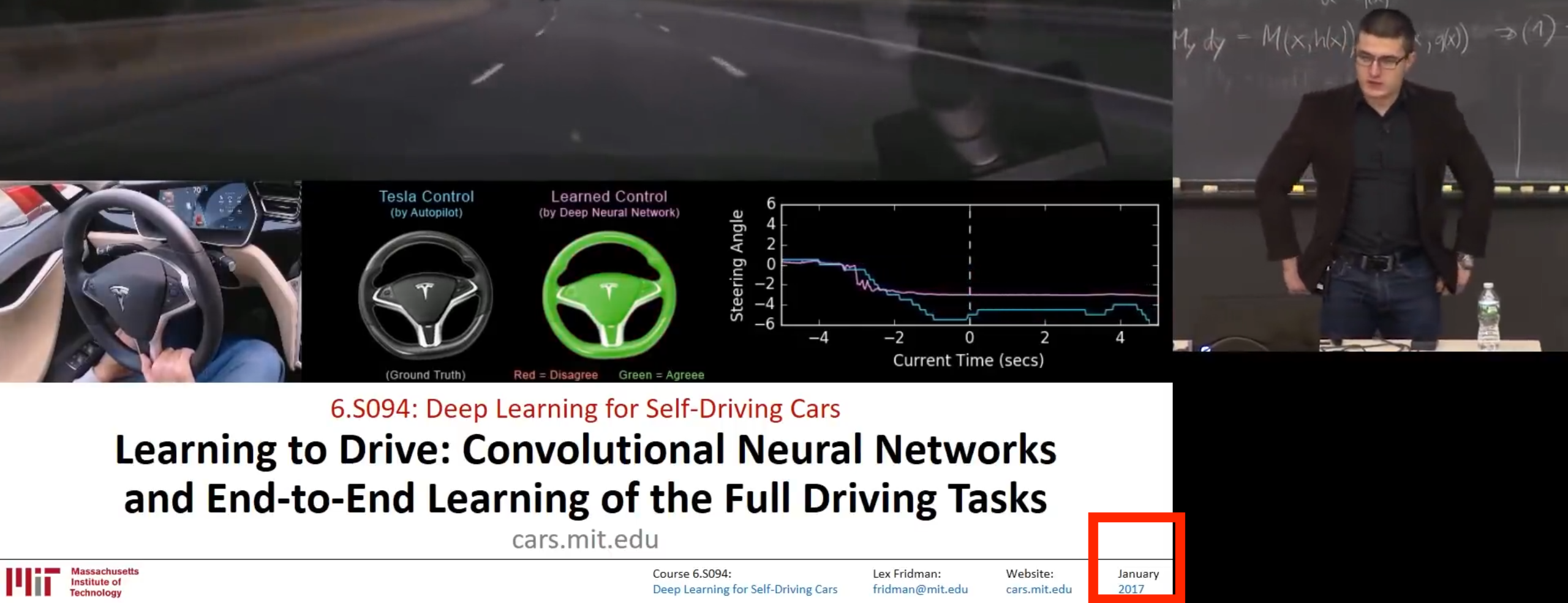
davidculley@hachyderm.io@mxchara Some US universities offer what's known as January classes during their 6-weeks-long winter breaks. They are just another way for US universities to make money.
On that note, I also recommend this video by the YouTube channel Second Thought on how US universities became corporations.¹
These "January classes" are "bullshit classes". They're there for the students to have some fun in a more casual lecture. For example, if they are international students from China or some other far-away place and can't afford to travel home over the Christmas holiday and are stuck on the campus and would have nothing to do otherwise. These classes are "pass or no record" classes, not "pass or fail" classes. Meaning there's no risk to take the exam, if you fail them, there won't be any trace in your papers that you tried but failed.
All the lectures Lex Fridman gave for MIT are such "January classes" during the winter break. These lecturers are also often unpaid.
Yet Lex Fridman pretends he's a researcher at MIT. The scribblings on the blackboard on his profile picture aren't even his nor do they have to do with ML. They are from the previous class of another professor who didn't wipe the blackboard and Lex poses before these equations to make himself look like a researcher.
Lex only ever wanted to be famous and have a large following. Making it look like he's a serious MIT researcher gave him the credibility for a headstart to become famous.
Fridman wrote a paper once that was utter trash and whitewashed Tesla's autopilot feature. That's how he got into the inner circles of Elon Musk. But since the paper was completely unscientific, it was later retracted by MIT. They no longer show it on their homepage. Lex is no MIT researcher.
I recommend this piece for a full breakdown of how Fridman is a fraud.²
¹ https://youtu.be/zipy9f7SrDc
² https://www.businessinsider.com/lex-fridman-podcast-anti-woke-elon-musk-ai
 2
1
0
2
1
0
Mx. Chara Aznable of Pnictogen
mxchara@cyberpunk.lol@davidculley holy heck what a trick to pull! it's like something out of a movie, but that's pretty typical stuff for a con artist, they know that they'll get much further if they pretend to wealth or high status. thanks for the info!
1
0
0
David Culley
davidculley@hachyderm.io@mxchara I've been shouting into the void for quite some time now how Lex Fridman is a fraud.
https://hachyderm.io/@davidculley/tagged/LexFridman
Precisely because he's such a wolf in sheep's clothing. "Just wanting to understand people." While he platforms the worst fascists and capitalists and acts as a mouthpiece for ultra-far-right billionaires and indoctrinates young men (and even women!).
It feels good that I'm no longer shouting into the void and get some resonance. 🙂
0
1
0
David Culley
davidculley@hachyderm.io@mxchara You're welcome!
The piece is really good:
https://www.businessinsider.com/lex-fridman-podcast-anti-woke-elon-musk-ai
Although sadly it's from Business Insider which is part of disgusting Axel Springer press. Its CEO Matthias Döpfner is in league with Peter Thiel and one of the most dangerous people in Europe.
1
0
0
Mx. Chara Aznable of Pnictogen
mxchara@cyberpunk.lol@davidculley ugh yeah...I've seen some useful scraps of news from Business Insider but I would assume that in general they're relentless salespersons of "big tech"
0
0
0

The Liquid Schwartz
OvertonDoors@infosec.exchange@mxchara :: Ayn Rand has entered the chat ::
1
0
0
Mx. Chara Aznable of Pnictogen
mxchara@cyberpunk.lol@OvertonDoors hopefully she'll be pacified by a sufficiently large government-relief check
1
0
0
haihappen
haihappen@social.anoxinon.de@leon_p_smith @davidgerard @mxchara @chx @passenger that's part of what I was grasping for: the indoctrination that cements certain patterns of thought that stay even if the pov changes.
The feeling of moral superiority might be root of the "evangelical christians" as well as the "I am my own god" kinda-sociopathic dipshit atheists and also "AI doomsdayers" maxhine god worshippers.
1
0
0
Leon P Smith
leon_p_smith@ioc.exchange@haihappen @davidgerard @mxchara @chx @passenger
The ideological connection between AI tech fascism and evangelical Christianity is... not something that I really anticipated, but also not that surprising in retrospect, especially considering I've long been aware of how nasty Peter Thiel and Curtis Yarvin are. I know I've seen references to plenty of media discussing this new connection, but I've not dove deep into the abyss to understand it myself.
I was aware of Curtis Yarvin under his pseudonym Mencius Moldbug very early on (circa 2008) due to my interest in functional programming languages like Scheme and Haskell. I thought his opinions on tech issues were incredibly shallow and often nonsensical, and the rest of his writing brought full five-alarm-fire signals in my mind immediately, but the man hides his worst takes under an immense quantity of other words, so I never really went diving into that abyss to find anything I felt was concretely actionable.
(I later started to learn about the depth of that five-alarm-fire during GamerGate, when there was a major controversy over Yarvin's invitation to speak at a (then-respected) functional programming conference... and others already had many of his worst takes indexed by that point... but I had no idea how much worse it was going to get.)
2
1
0

Dr. Bruce Simpson
bms@bsd.cafe@leon_p_smith @haihappen @davidgerard @mxchara @chx @passenger Why were the BBC describing this guy as an "ageing rock star like figure" in a piece ~4-5 weeks ago quietly published on their News website over a weekend, punctuated with what struck me as a rather weak rejection of what some might call "techno-fascism" in the final paragraph?
That's what I'd like to know.
And why has the former head of Google Europe been appointed Director General?
The conflict of interest is so abundantly obvious it redefines the very notion of question-begging.
1
0
0
Mx. Chara Aznable of Pnictogen
mxchara@cyberpunk.lol@bms @leon_p_smith @haihappen @davidgerard @chx @passenger I can't be sure of course but I suspect that one possible reason that might explain the soft and cushy tone of all mainstream reportage of technofascist CEOs and celebrities is that we're seeing the end result of a lengthy process of negotiation with publicists.
The CEOs especially have a a lot of money to throw at "media outreach" and all that; even a relative pipsqueak like Curtis Yarvin probably can afford to work through agents who dictate terms: "You WILL confine your questions to certain areas and NOT use certain words."
0
0
0
Rusty ScrapTangle
Gaptangle@dragonscave.space@mxchara Probably not. A headmate of ours was getting tangled in another pile of terrible ideas at the same time as they tried to read this and got warned off it funnily enough by said pile of terrible ideas, so we might be a bit biased, but meh to that thing. We read some of it and he does ramble on. It's one thing if people ramble on in text, even if they're only occasionally using multiple characters to explain a concept. But he painted in all the rest of the hp cast as people to sit there openmouthed at how epic he is or resisting him in some way just to get informed of why that just doesn't make any sense after all. Now that we're not in so much danger reading it, we don't even want to, figure the rest of the book is basically the same as the first bit we read.
*this was supposed to reply to the above post, we'll forgive you if you read it, ha can't speak for anyone else though
1
1
0
Mx. Chara Aznable of Pnictogen
mxchara@cyberpunk.lol@Gaptangle Yeah think we're gonna give this one a miss. Too many people are saying it's not worth it and that there are better places to get some idea of what Yudkowsky's all about.
0
0
0
The Liquid Schwartz
OvertonDoors@infosec.exchange@mxchara If is to be fictional magic systems written en-masse, then might I suggest one which is adeptly written with lavishly detailed characters and engrossing dialogue: The Malazan Books of the Fallen, of which the first is Gardens of the Moon
Life is short, shitty fiction written by edgelordes isn't worth the bother.
0
1
0
chx
chx@chx.contact@leon_p_smith @haihappen @davidgerard @mxchara @passenger Curtis Yarvin, ah yes. See the matchstick in https://percontra.net/issues/31/poetry/one-sentence-about-tyranny/
1
1
0
Mx. Chara Aznable of Pnictogen
mxchara@cyberpunk.lol@chx @leon_p_smith @haihappen @davidgerard @passenger Yes. Exactly. Excellent poem (I've bookmarked it) and if I might amplify the specific point: why did Yarvin's shitty ideas simply fester in the tech community for decades? The answers to that question pertain at least in part (in my opinion) to a self-deceitful "free speech" culture engendered by the unwillingness of a lot of abused children now grown up to submit to any emotional or moral restraints.
We're seeing so much internalized abuse on display and it's ghastly.
2
0
0
David Gerard
davidgerard@circumstances.run@mxchara @chx @leon_p_smith @haihappen @passenger but mostly Thielbux. A *lot* of Thielbux.
1
0
0
Mx. Chara Aznable of Pnictogen
mxchara@cyberpunk.lol@davidgerard @chx @leon_p_smith @haihappen @passenger oh gawd...yeah he (and a pack of other CEOs and big-ticket capitalists) must be digging up every intellectual crank they can find. Yarvin (going by what I've seen of him on Twitter) has startlingly little to offer; there's right-wing figures of comparable gravitas who are far more successful at seeming like they know deep intellectual secrets. But I'd guess it matters a lot, in this sphere, that Yarvin got started back in the 1990s. He's practically an elder statesman of tech, like Bill Gates! =D
1
0
0
emenel
emenel@post.lurk.org@mxchara @davidgerard @chx @leon_p_smith @haihappen @passenger one name that doesn’t come up nearly often enough, and who lent his academic authority to yarvin et al, is nick land. if you really want to dig into the philosophical cult that birthed a lot of this garbage land is the place to start imo.
1
1
0
Leon P Smith
leon_p_smith@ioc.exchange@mxchara @chx @haihappen @davidgerard @passenger
Honestly, though I am tempted to say more, at this point I think I'll just say this is *far truer* than you probably think it is, both in direct and literal and indirect and metaphorical ways.
But I will say that this video by Tad Stoermer has been on my mind _a lot_ lately.
If you want to know why things have festered, this video has a lot of explanatory value.
https://www.youtube.com/watch?v=vqZXRzFBcz4
0
1
0
Leon P Smith
leon_p_smith@ioc.exchange@emenel @mxchara @davidgerard @chx @haihappen @passenger Yeah, I've heard his name repeatedly come up lately, but I personally don't know anything about him.
2
0
0
emenel
emenel@post.lurk.org@leon_p_smith @mxchara @davidgerard @chx @haihappen @passenger the “founder” of neoreaction/dark enlightenment/accelerationism … used to run the CCRU at Warwick university.
2
0
0
emenel
emenel@post.lurk.org@leon_p_smith @mxchara @davidgerard @chx @haihappen @passenger land is dangerous because, unlike these other bafoons, he’s an actual philosopher. he was a delueze scholar that took the ideas of rhizomatic systems of control and mixed it with lovecraftian-occultism and psychedelics and came to the conclusion that humanity needs to accelerate itself off a cliff in order to reach the next phase of existence. (paraphrasing of course).
1
1
0
Mx. Chara Aznable of Pnictogen
mxchara@cyberpunk.lol@emenel @leon_p_smith @davidgerard @chx @haihappen @passenger ahh yes, I am worried about the people we do NOT see, because I can tell there's a rough division between extremist spokespersons who are best able to mingle with others (and who are therefore likely to be more superficial and less intellectual) and those who have more intellectual heft but who consequently are not for public consumption because they speak in pure racist panegyric.
1
0
0
Mx. Chara Aznable of Pnictogen
mxchara@cyberpunk.lol@emenel @leon_p_smith @davidgerard @chx @haihappen @passenger ah yeah...can we talk yet about how "computer science" (which I tend to think far too little of, as a discipline, although I realize that my stance is bilious and biased by personal experiences) has been a focus of corporate and marketing infiltration of college campuses? 😬
0
0
0
emenel
emenel@post.lurk.org@mxchara @leon_p_smith @davidgerard @chx @haihappen @passenger this is a good overview of land, and recent!
https://www.cccb.org/en/w/articles/nick-land-or-the-origins-of-the-techno-fascist-apocalypse
0
1
0
David Gerard
davidgerard@circumstances.run@leon_p_smith @emenel @mxchara @chx @haihappen @passenger "Neoreaction A Basilisk" will fill you in as much as you need without bothering to read him (do not read him)
1
1
0
David Culley
davidculley@hachyderm.io@mxchara Oh boy. Fridman wears a suit at every occasion (famously even in the Amazonian rainforest for his interview with Paul Rosolie) because, he says, it makes him feel like Richard Feynman, his hero.
Putting aside that Feynman was an unfaithful hurtful asshole to women and shouldn't be a role model for men, no matter his contributions to the field of physics …
… people started making the joke that Lex looked more like Agent 47, the main character from the 2000s video game "Hitman".
In an effort to bond and connect with his audience, Lex leaned into that joke.
I didn't know he made jokes about having dead bodies in his car. I had stopped following him at some point.
He *is* good friends with Ivanka Trump and Mark Zuckerberg, and Musk of course. Having also interviewed JFK Jr. maybe he does indeed have the body of some whistleblower in his trunk, next to a dead bear cub, for an upcoming BBQ party with Aella. 😄
2
1
0
Mx. Chara Aznable of Pnictogen
mxchara@cyberpunk.lol@davidculley was Feynman even really that important as a physicist? I know that he had some role in formulating the theory of quantum electrodynamics but so did other physicists--no discovery of such importance isn't being simultaneously worked on. He seems to be chiefly important as Caltech's designated science hero, marketed relentlessly as such, even though he was a total shit and, frankly, from the bits I've seen, not a good lecturer.
0
0
0
chx
chx@chx.contact@davidgerard @leon_p_smith @emenel @mxchara @haihappen @passenger I skimmed Neoreaction A Basilisk so in short these guys wanted Steve Jobs as King and instead hatched Donald Trump as Emperor? niiiiiiiice
1
0
0
Mx. Chara Aznable of Pnictogen
mxchara@cyberpunk.lol@chx @davidgerard @leon_p_smith @emenel @haihappen @passenger I loathed Steve Jobs in the 2000s and loathed what he transformed Apple into, so it's very depressing to see how many people genuinely responded to his cult-leader style. "Gosh I want a Reality Distortion Field of my own, there's a healthy ambition to have"
0
0
0
Mx. Chara Aznable of Pnictogen
mxchara@cyberpunk.lol@bstacey @davidculley I think he has "cool teacher syndrome" and that's a really bad trait to have if you're gonna be sold to the world and the general public as the living avatar of Caltech's collective physics genius. The "cool teachers" are the ones who leave their students walking out thinking "wow cool teacher" and not thinking about the actual subject.
0
0
0
Mx. Chara Aznable of Pnictogen
mxchara@cyberpunk.lol@bstacey @davidculley yeah that puzzles me too. was there some specific incident from Feynman's autobiographical writings where he wears a different suit every time just because he hated being made to wear one at all, or something
0
0
0
Mx. Chara Aznable of Pnictogen
mxchara@cyberpunk.lol@davidculley ah I found it. CW twitter link
0
0
0

Andrew Wade
mscibing@hachyderm.io@mxchara The first half is a bit like if Conan Doyle thought the Sherlock Holmes stories were actual detective manuals rather than entertaining stories: it does not hold up well. The back half is probably more important to understanding the cult, which is unfortunate if you're not enjoying the read; there is a lot to wade through. It is oddly obsessed with mortality, and there is something very strange going on with the Harry Potter self-insert character that I don't understand. (I was unaware of EY as a cult leader when I read HPMOR, but it wasn't a surprise when I heard.)
0
1
0