
myrmepropagandist
futurebird@sauropods.win
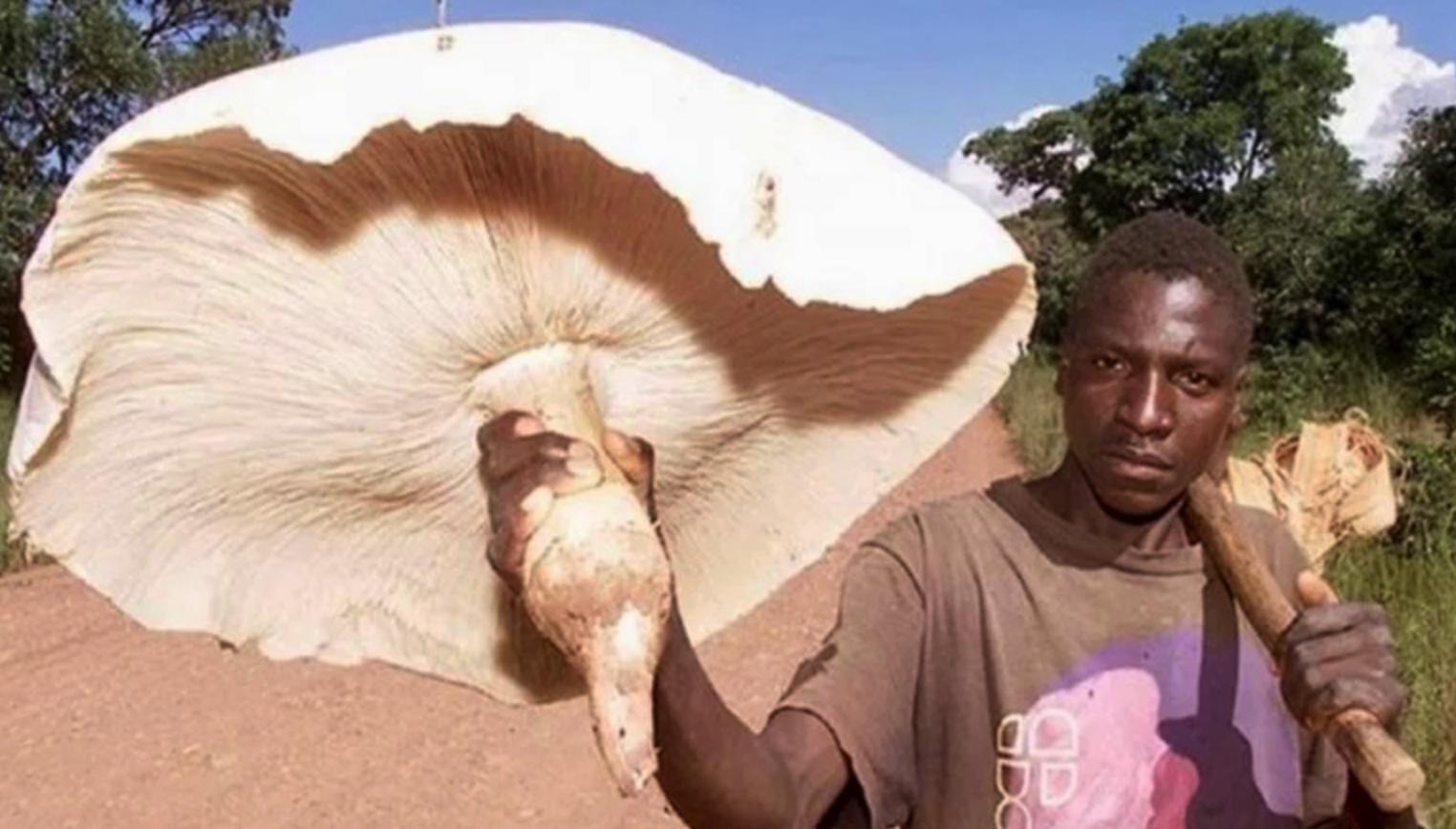
It turns out that fungus growing termites sometimes cultivate Termitomyces titanicus. This is an excellent scientific name.
CORRECTION:
I assumed they had to work like ants. Wrong! (A fruiting body would only emerge from a dead ant colony not so with these termites) Something about macrotermitinaes nuptial flights stimulates mushroom fruiting. (!) They get covered in pink spores.
And you can eat it!
Hence the species name.
 5
5
 2
2
 3
3
myrmepropagandist
futurebird@sauropods.winThe fungi farmed by ants (Leucoagaricus gongylophorus) also produces mushrooms when their colonies die out. This fungi can't survive without the ants and the ants propagate it by carrying it with them when they found new nests:
So what is the purpose of the mushrooms?
Is it just a hold-over from the days before the fungi was dependent on ants?
I've been trying to find out if you can eat the ones that grow on old ant nests.
4
1
2
myrmepropagandist
futurebird@sauropods.winIt's never really found just living on its own without ants to take care of it?
Ants keep it clean, set the correct humidity, feed it plant matter...
In fact, many antkeepers have tried to farm it (so they have extra fungi for their pet ants) and it's basically been impossible for people to do it, even with clean rooms, carefully cut leaves and humidity chambers.
It's totally dependent on ants.
Now... could it maybe float as spores and join an existing ant colony? Maybe? IDK
1
1
2


myrmepropagandist
futurebird@sauropods.winThe size says something about what the termites created. An empire!
0
0
1

myrmepropagandist
futurebird@sauropods.winI've been slowly reading this paper on the genetics of the crops of various ants. At lest per genus there isn't much crossover. And even per species.
0
0
0
myrmepropagandist
futurebird@sauropods.winThe great mushroom is a tribute to the termites. Announcing they recently sent out a nuptial flight. (corrected)
(Often when you see mushrooms it means that the Mycelium, the living fungi has reached the end of its life.
Somehow this isn't the case with Macrotermitinae and Termitomyces titanicus. I will need to think about how this is possible.)
0
2
1

Frank Aylward
foaylward@genomic.social@futurebird @PetraOleum i used to work on this in grad school - hard fungus to collect!
The fungus packs the hyphal swelling that it feeds to the ants with enzymes to degrade plant material. The ants eat the hyphal swellings, and then defacate on fresh plant material as they bring it into a nest. This is perhaps one reason why the fungus can't live alone now - it needs the ants to pre-treat the leaves with these enzymes in order to grow efficiently. Bizarre stuff!
0
2
1
llewelly
llewelly@sauropods.win@futurebird In both cases it seems to me the fruiting body would produce spores, and given the right weather conditions, those spores could potentially find a new colony of either appropriate termites in the first case or appropriate ants in the second case. A last-ditch effort to continue, if you will. If this can't work for some reason - I would like to know why.
0
0
0
myrmepropagandist
futurebird@sauropods.win"gongylophorus" isn't a bad name for the fungi of the Atta. The ants have domesticated them to make gongylidia which are like little underground ant treats that form on the mycelium. So it's a gongylophorus fungi, or a fungi that makes gelatinous translucent protein packed ant treats.
And we think we are so slick with our beans and corn and apples.
1
2
2
myrmepropagandist
futurebird@sauropods.winI've been reading about this mushroom and everyone says it's *really* delicious. But, you just need to luck out to try it. It's not really possible to cultivate it.
When a termite colony has a nuptial flight you may get a few to share with the town.
(corrected the reason for fruiting, which is different than in leaf cutting ants. )
2
1
1

@futurebird ...this suggests a fictitious future setting where farmers raise insect colonies not because the insects make an excellent source of protein, but because their agriculture turns out to produce great food for us, too. (I mean, we already do this for honey, right?)
1
0
0
myrmepropagandist
futurebird@sauropods.winWe kind of do that with old oak forests and truffles to some degree already.
Termites eat rotting wood, they might be able to be part of a composing operation and you get mushrooms as a side benefit?
0
1
1
myrmepropagandist
futurebird@sauropods.winThis is why the mushrooms are so huge. So they can dust the entire flock of winged males and females with the spores they will need for their new colony. Like throwing rice at a wedding i guess?
0
0
1
myrmepropagandist
futurebird@sauropods.winNot aphids that I know of, but there is a species of scale insect that is deeply dependent on Acropyga who keeps them underground on plant roots. These ants are cryptic and carry a pregnant scale insect in their mandibles with them when they start a new colony.
0
1
0
myrmepropagandist
futurebird@sauropods.winThe scale insects are like cows ... they can't survive without the ants that keep them. And I guess they must be docile towards ants.
0
0
1


i had always assumed that the ant fungus fruiting bodies were just tiny things growing on the fungus that the ants would constantly eat...
0
0
0
0
0
1

Barney Dellar (he/him)
BarneyDellar@mastodon.scot@futurebird Almost ALL mushrooms are uncultivatable! There’s a tiny handful that we can cultivate, but the rest of the edible ones we have to forage for.
1
0
0
myrmepropagandist
futurebird@sauropods.winWell the termites and ants can do it.
It just requires work on a scale we can't really deal with. Weeding with tweezers.
0
0
0

bencourtice
bencourtice@aus.social@futurebird mycologist partner didn't know about the mushrooms, says thanks for the info. She says 99% of mushrooms are not seriously toxic but you don't want to get the one that is!
These are handy for the ants because they procure plant carbohydrates stripped of all the chemical defenses the plants use to stop ants eating them. Sneaky!
When the ants are gone is when nutrient levels drop which is typical mushroom forming time. It's possible they reproduce mostly asexually (via the ants) but undergo occasional sexual reproduction to shuffle the genes once in a while (some fungi do this). If you could send a mushroom to a mycologist they might be able to answer some of these questions.
0
1
1